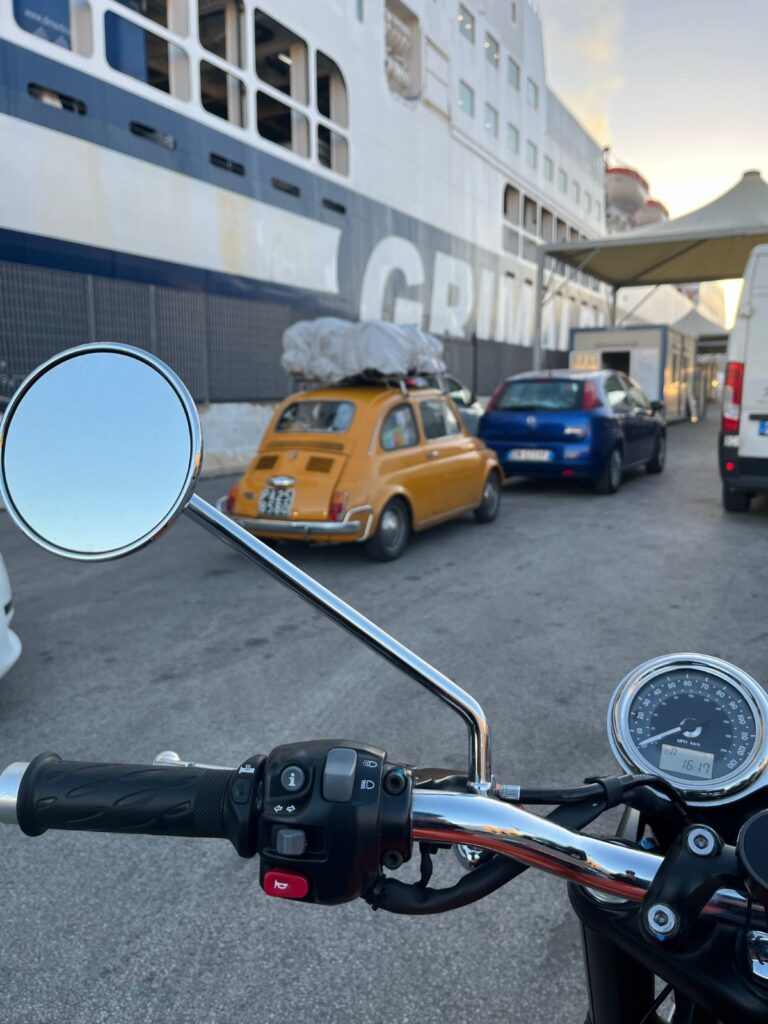
There’s something about Alpine roads that makes every other road feel flat.
Not just in elevation — though there’s plenty of that. But in the richness of the riding itself. A perfectly smooth tarmac that winds through hairpins and sweeping bends. One moment you’re in bright sunlight; the next you’re in cool shadow between rock faces. The engine’s singing, the bike is balanced perfectly through the curve, and you’re completely present in the moment.
But Alpine riding isn’t just about pointing your bike uphill and hoping for the best. There’s a technique to it. A rhythm. An understanding of how your bike behaves when the air is thinner, when the temperature drops, when every corner matters because there’s a cliff on one side and a wall of rock on the other.
And if you’re planning a 2027 motorcycle tour through Europe, the Alpine passes are probably high on your list — whether that’s the Col de l’Iseran in France, the Stelvio in Italy, or the Gotthard in Switzerland. So let’s talk about how to ride them properly.
Understanding Alpine Road Dynamics
The altitude effect
At 2,000+ metres, your bike’s engine doesn’t have as much oxygen to work with. That means less power, less braking force, and less stability. If you normally cruise at 60% throttle on the motorway, you might need 75% at altitude just to maintain the same pace. Your brakes take longer to bite. Traction, especially in corners, becomes more precious.
This isn’t a problem — it’s just different. But if you’re used to riding at sea level, ignoring it will catch you out. Get your speed right before the corner, because you can’t make the same aggressive adjustments mid-bend that you might at lower altitude.
Temperature and grip
The temperature drops roughly 1°C for every 100 metres of elevation. So a pass at 2,500m might be 20–25°C cooler than the valley below. Cold air means your tyres need more weight on them to reach operating temperature. Cold asphalt offers less grip. If it’s been raining — which it often has on Alpine passes — the road might be genuinely slippery.
Ride smoother at altitude. Smaller throttle inputs. Gentler steering. Let the road come to you rather than attacking it.
Weather and visibility
Mountain weather changes fast. You can enter cloud halfway up a pass and lose visibility to 20 metres. Rain that’s light in the valley can be intense at the summit. The passes are also exposed — strong winds are common once you’re above the tree line. Check the forecast before you start. Carry extra layers. Be prepared to go slower if conditions deteriorate.
The Five Core Techniques for Alpine Riding
1. Trail braking through hairpins
This is where Alpine riding separates from normal road riding. On a standard road, you brake, release, accelerate. But on a hairpin at 2,000m, you often need to brake while turning — carrying brake pressure deeper into the corner than you normally would.
Approach the corner. Start your braking. As you enter the turn, slowly reduce brake pressure rather than releasing it abruptly. This keeps weight on the front tyre while you’re leaning, improving grip and stability. The braking pressure should be gentle — maybe 10–20% of what you were using on the straight. You’re not using the brakes for deceleration anymore; you’re using them to manage weight transfer.
2. Reading the road surface
At altitude, road texture matters more. Wet asphalt, loose gravel, patches of older tarmac that’s slightly smoother — all of these affect grip in ways they wouldn’t at lower elevation. Before you attack a corner, look at the surface. Is it wet? Dark and shiny (slippery) or light and porous (better grip)? Is there gravel on the outside of the turn?
Scan the road 3–4 seconds ahead. Not just the line through the turn, but the surface texture and condition. Let that information inform your brake pressure, lean angle, and throttle position.
3. Late apex, smooth acceleration
The bigger, longer Alpine bends are best with a slightly later apex and a very smooth roll-on of throttle. This gives you a better view of the exit and allows you to accelerate sooner without overwhelming the bike. Aim for an apex that’s maybe 2–3 metres later than you’d normally choose. Add throttle very smoothly — a sudden burst can overwhelm the back tyre, especially on imperfect surfaces.
4. Breathing and throttle control
On a 1-in-4 pass with a thousand-metre drop on one side, it’s easy to tense up, grip the bars too hard, and start making jerky throttle inputs. Jerky inputs are what cause crashes on mountain roads. Focus on your breathing. Breathe in on the approach to a corner, out as you’re mid-turn. This naturally smooths out your inputs because your body is less tense.
5. Speed management across a whole pass
The biggest mistake riders make on Alpine passes is treating each corner independently. Settle into a rhythm before you start the climb. Decide on a pace that lets you concentrate fully — not so slow that you’re bored, but not so fast that you’re on the ragged edge. The passes are long. You need endurance, not heroics.
Pre-Ride Preparation
Bike setup
Check your tyre pressures before climbing. Cold morning air and high altitude can affect how your tyres feel mid-pass. Brake pads should have plenty of material left — long descents can heat your brakes substantially. Fuel level should be healthy; some Alpine passes have few refuelling options, and climbing uses more fuel than cruising on the flat.
Gear and clothing
Layers are essential. Bring a waterproof, even if the forecast is clear. Cold hands make smooth throttle control harder — good quality riding gloves help maintain dexterity and sensitivity. A helmet with a good seal and a full-face design makes a genuine difference to comfort and focus on exposed, windy sections.
Physical and mental state
Don’t ride Alpine passes when you’re tired or emotional. Your risk tolerance shifts when you’re not fully present. Stop for breaks — a 10-minute coffee stop halfway up a pass isn’t time lost, it’s a chance to reset mentally. Ride with confidence, but ride within your limits. The pass will be there next year if you decide to turn back today.
Recommended Alpine Passes for Different Skill Levels
Great for building confidence
The Col de la Republique (France) and Col de Turini offer fantastic views and good road surfaces without extreme exposure. The San Bernardino (Switzerland) is well-maintained — a great place to practice trail braking and reading the asphalt.
Intermediate challenges
The Col du Galibier (France) is longer and higher, but well-travelled with excellent road condition. The Simplon Pass (Switzerland) — long, winding, classic Alpine road with real exposure and wide open corners.
Advanced and expert territory
The Stelvio Pass (Italy) — 48 hairpins, 2,758 metres, stunning views. Come prepared. The Col de l’Iseran (France) — highest paved pass in the Alps at 2,764m. Narrow, exposed, and extraordinary. One of the greatest rides in Europe.
Ready to Ride the Alps in 2027?
Alpine riding at its best is one of the most technically satisfying experiences you can have on a motorcycle. The roads are extraordinary. The scenery is extraordinary. And when you’re riding well — smooth, confident, fully in control — it’s a feeling that’s hard to beat.
Our 2027 tour calendar includes several routes that take in the best Alpine passes in Europe. Browse the full 2027 tour packs or fill in the form below and we’ll send everything directly to you.
Ride Free. Ride Wild. ✌️
Joshua James
Wild Roads Motorcycle Tours