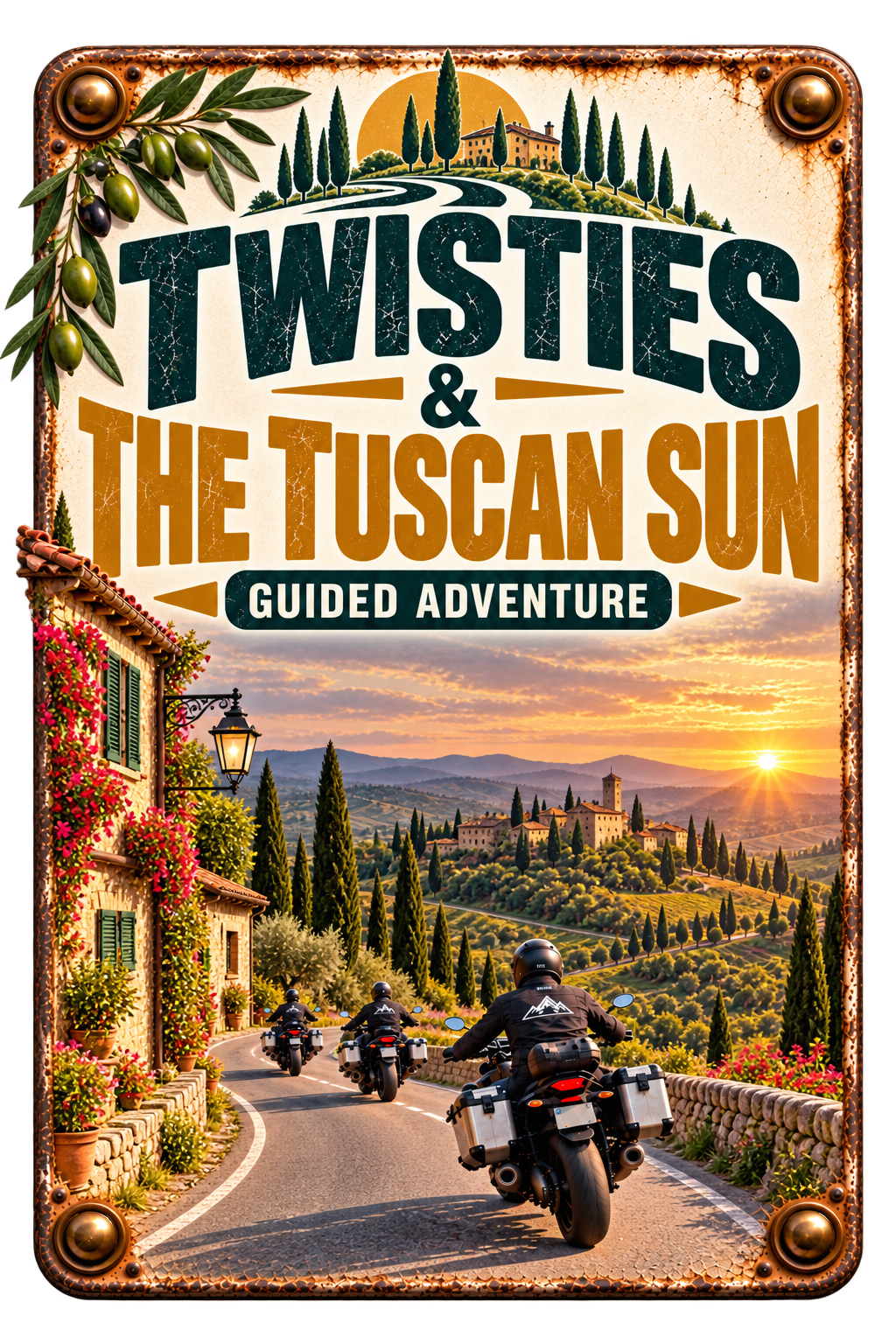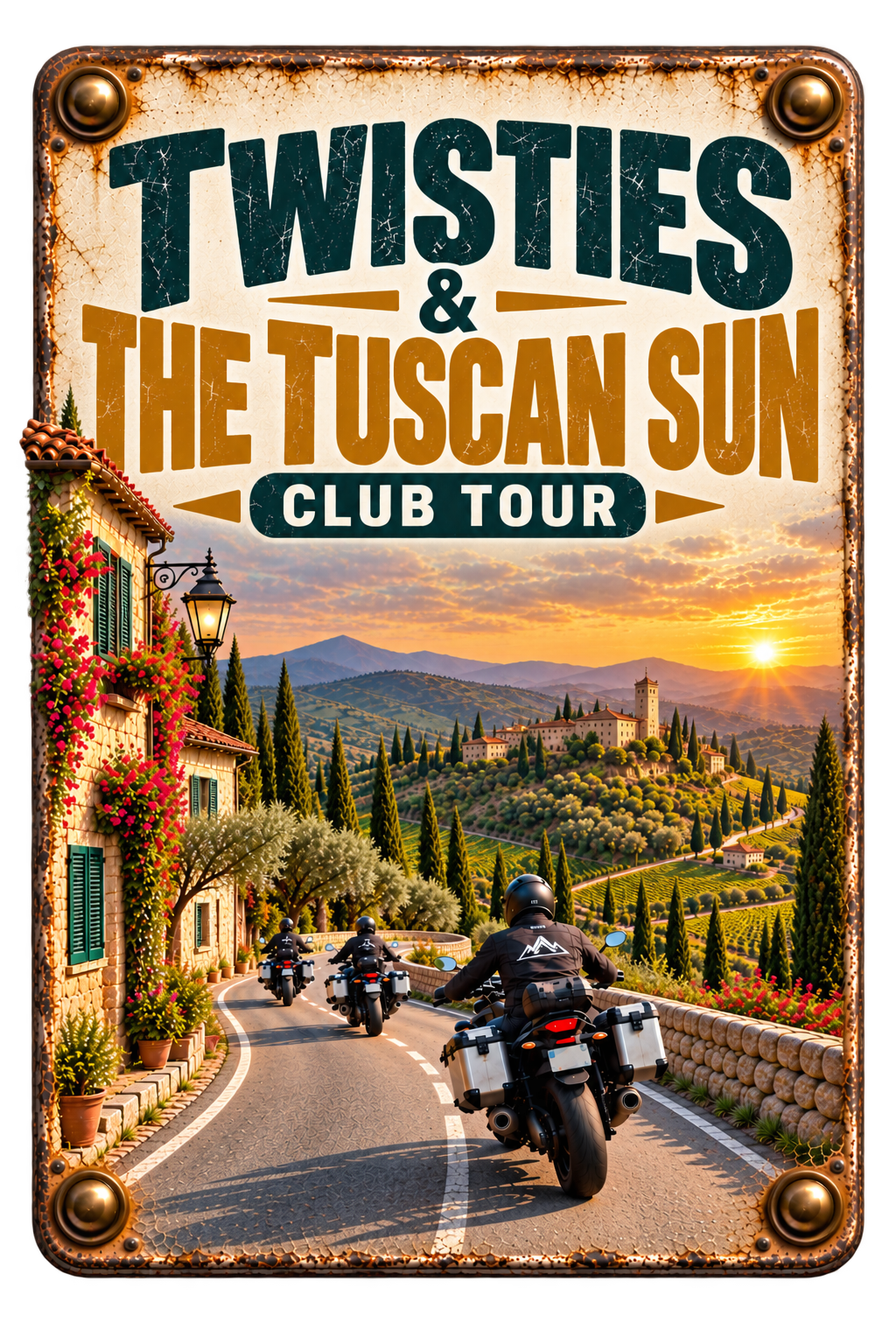
There’s a particular kind of riding that only exists in a handful of places in the world.
Where the road is perfect, the scenery is extraordinary, the food and wine at the end of the day are genuinely world-class, and the whole experience feels less like a motorcycle tour and more like a dream you’re somehow living.
Tuscany and the Italian Alps is that place.
We’ve ridden a lot of Europe. The Balkans, Morocco, the Pyrenees, the Scottish Highlands. All of them extraordinary in their own way. But there’s something about the combination of Alpine passes, Tuscan hill roads, and Italian culture that sits in a different category altogether. It’s not just the riding — it’s the whole thing. The villages. The food. The light in the late afternoon. The way a good espresso tastes after three hours in the saddle on a mountain pass.
This is the route we built the Twisties & the Tuscan Sun tour around. And this guide will tell you exactly why it’s worth every mile.
The Route: From the Alps to the Heart of Tuscany
The genius of this tour is the contrast.
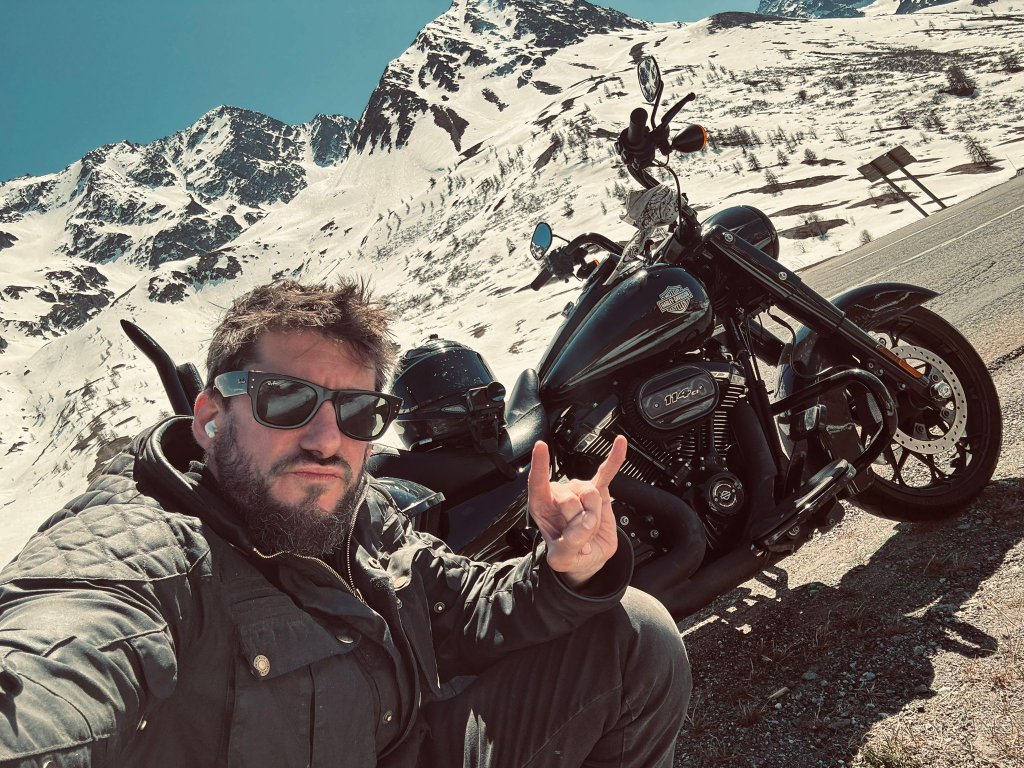
You start in the Alps — proper high-altitude mountain riding, the kind that demands your full attention and rewards it with scenery that stops you cold. Then, over the days that follow, the mountains soften into foothills, the foothills give way to the rolling Tuscan landscape, and suddenly you’re riding through vineyards and cypress-lined roads with the windows of hilltop villages catching the afternoon sun.
It’s one of the most varied week-and-a-half of riding you can do anywhere in Europe. And it’s all on roads that feel like they were designed for motorcycles.
The Alpine Passes
The tour opens with the Alps, and it doesn’t ease you in gently.
The great Alpine passes — the Stelvio, the Gotthard, the Splügen, the Maloja — are among the finest motorcycle roads in the world. Not just in terms of scenery, which is obviously extraordinary, but in terms of the actual riding experience. Tight hairpins, long sweeping bends, perfect tarmac, altitude that makes the engine breathe differently and the air taste cleaner.
The Stelvio Pass in particular is something every serious touring rider should experience at least once. 48 hairpins. 2,758 metres. Views that stretch across three countries on a clear day. It’s one of those roads where you finish it and immediately want to turn around and ride it again.
But it’s not just the famous passes. The minor Alpine roads — the valleys, the lake roads, the smaller cols that the coaches can’t access — are where the real riding happens. Empty roads, perfect surfaces, and scenery that you genuinely can’t photograph properly because it’s too wide, too tall, and too present to fit in a frame.
The Mountain Passes on the Way South
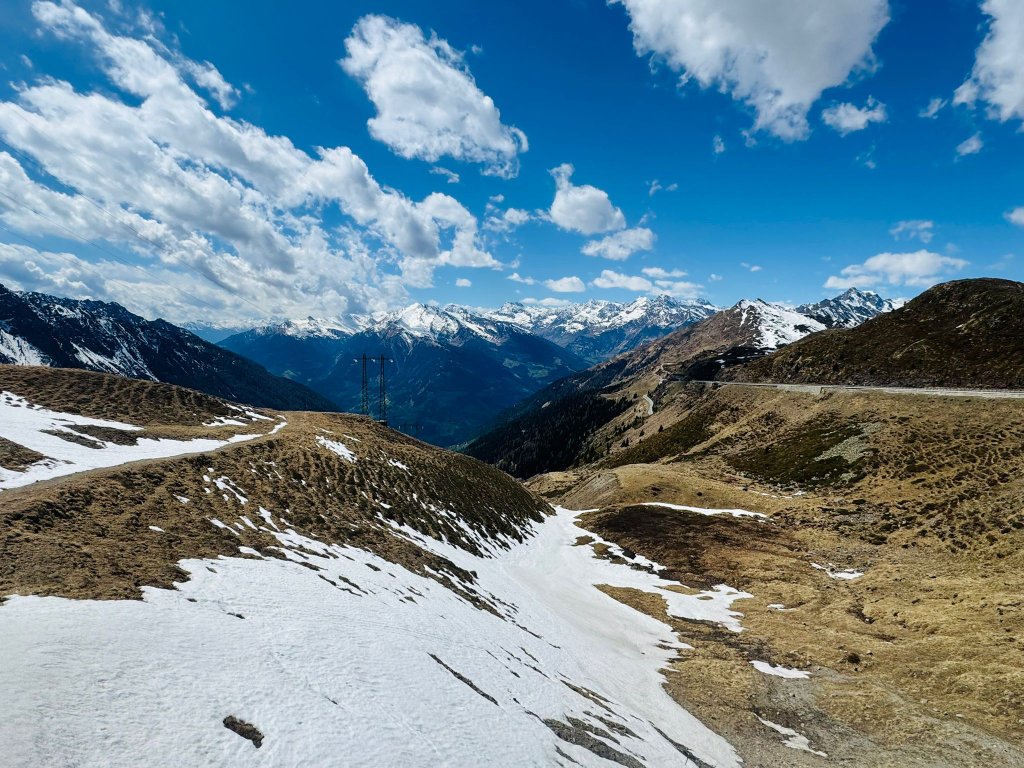
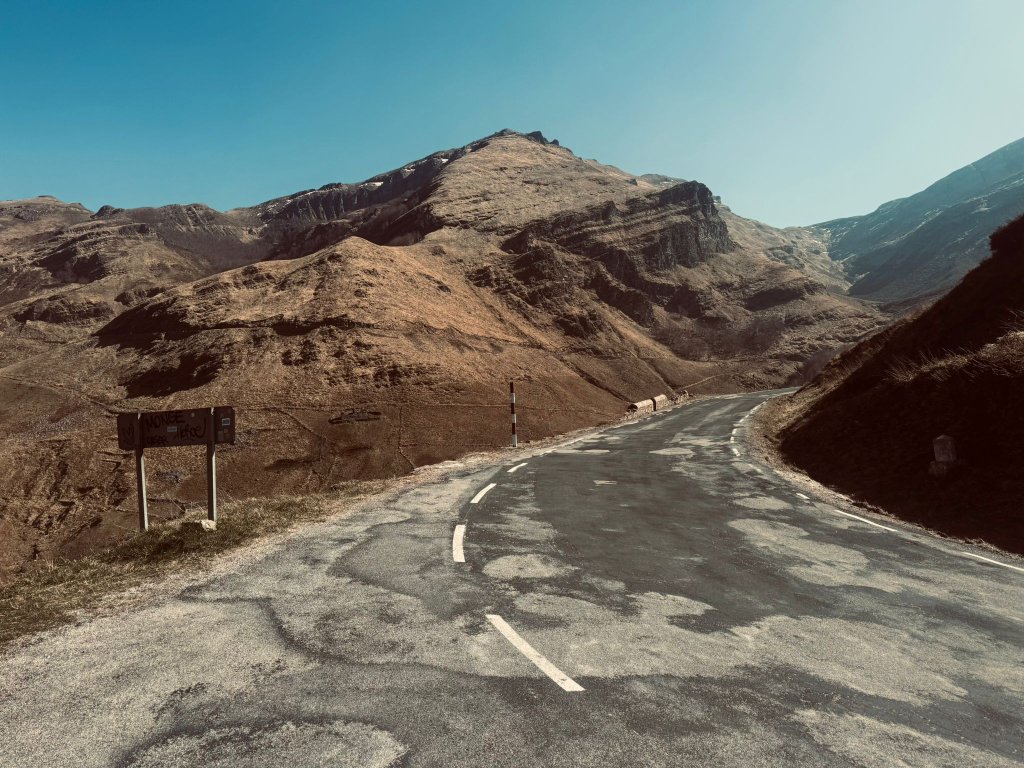
As you move south from the Swiss Alps and begin threading through the French and Italian border regions, the character of the passes changes. They become drier, more exposed, more theatrical. The vegetation thins out, the rock takes on warmer tones, and the roads have that quality peculiar to high-altitude southern Europe — perfectly surfaced but clearly wild, running through landscapes that feel completely untouched.
Some of the best riding on the entire tour happens here — on roads that most touring riders have never heard of, precisely because they’re not on the standard bucket lists. That’s the advantage of riding with someone who knows the region properly.
The Dolomites
Between the Swiss Alps and Tuscany lies one of the most dramatic landscapes in Europe: the Dolomites.
The Dolomites are a different proposition from the western Alps — sharper, more vertical, more theatrical. The rock formations rise almost straight out of the valleys in great towers and walls of pale stone. The roads through them — particularly the Sella Ronda passes and the Passo Giau — are considered by many experienced riders to be among the finest motorcycle roads in the world.
The Passo Giau sits at 2,236 metres and has a surface and alignment that genuinely feels purpose-built for motorcycles. The approach from the south, through the Codalonga Valley, is one of those roads where you find yourself slowing down not because you have to, but because you don’t want it to end.
The Descent Into Tuscany
The transition from the Dolomites to Tuscany is one of the great pleasures of this tour.
You ride south through the Veneto and the Apennines, and somewhere along the way the landscape changes. The mountains become softer. The colours shift from the cool greens and greys of the Alps to the warm ochres, reds and golds of central Italy. The air gets warmer. The road signs start pointing to places you’ve heard of — Florence, Siena, San Gimignano.
And then you’re in Tuscany, and everything is exactly as extraordinary as you’d hoped.
Tuscany on a Motorcycle
Most people experience Tuscany from a car or a tour bus. They follow the main roads between the famous towns and see the landscape as backdrop rather than destination.
On a motorcycle, you get the real thing.
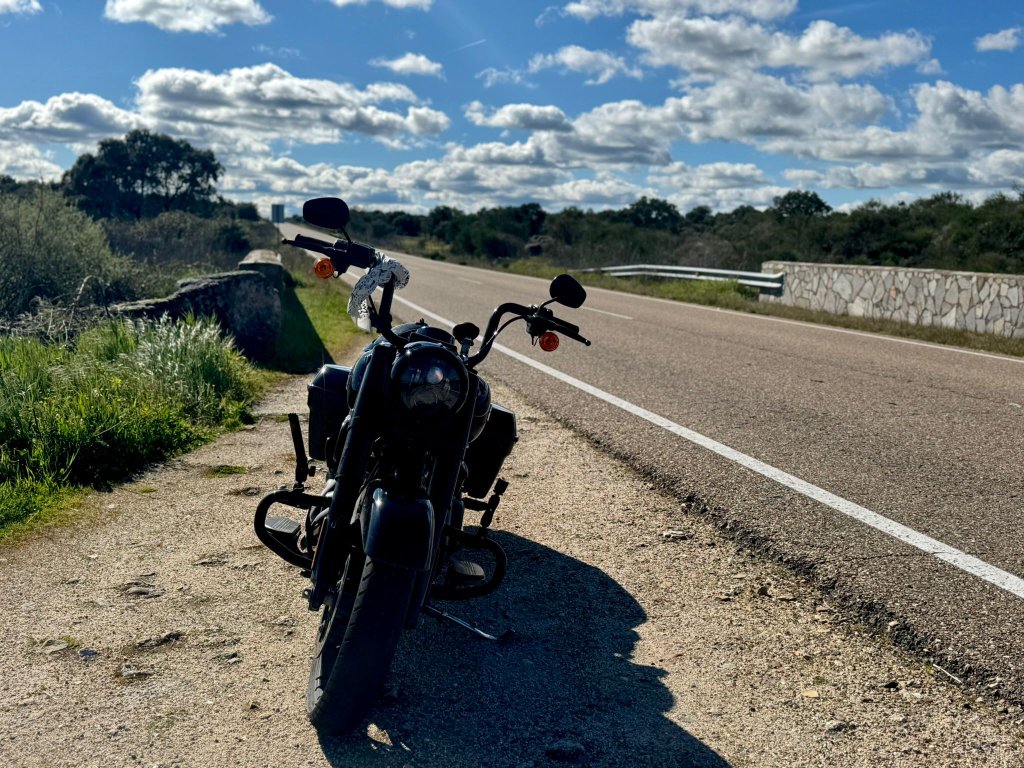
The white roads — the strade bianche — that wind between vineyards and olive groves. The empty hilltop roads above Montalcino and Montepulciano. The Val d’Orcia, where the road curves through one of the most photographed landscapes on earth and you have it almost entirely to yourself before 9am. Riding Tuscany is not just scenic — it’s intimate. You’re inside the landscape in a way that no car allows.
The towns are worth the stops too. Siena has one of the finest medieval city centres in Europe. San Gimignano feels like stepping directly into the 13th century. Montalcino produces some of the best wine in Italy, and the restaurants in the villages around it — the small, family-run places that don’t appear in guidebooks — serve food that will change your standards permanently.
The Coast: Where the Mountains Meet the Sea
One of the aspects of this tour that surprises riders most is the coastline.
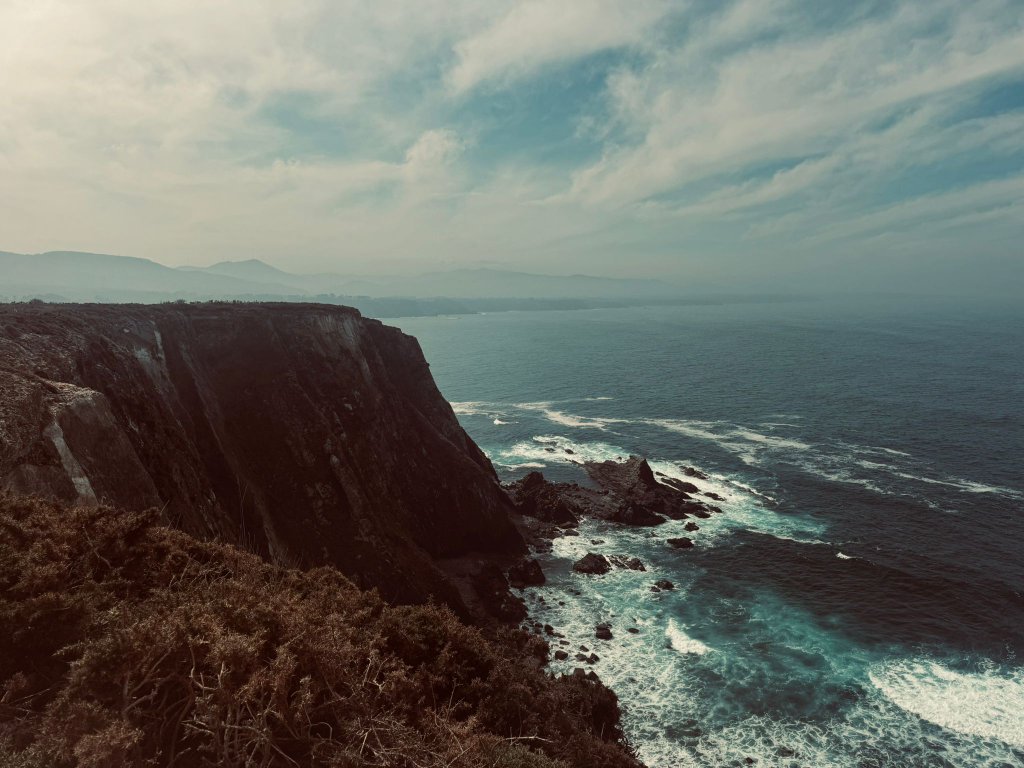
Italy’s Tyrrhenian coast south of Livorno offers a completely different riding experience from the mountains — long, open roads along clifftops, views across to Elba and Corsica on a clear day, and a rhythm that’s more relaxed and expansive after the technical demands of the Alpine section. The coastal roads here aren’t the crowded tourist strips of the Amalfi or the Ligurian Riviera — they’re quiet, unhurried, and genuinely beautiful.
Depending on the specific itinerary and timing, the tour can also take in sections of coast heading north towards the Cinque Terre — where the road clings to clifftops above the sea and every bend reveals another postcard view. It’s a completely different kind of riding from the passes, and it’s just as memorable.
The Food: Why It Matters on a Motorcycle Tour
Let’s be honest about something.
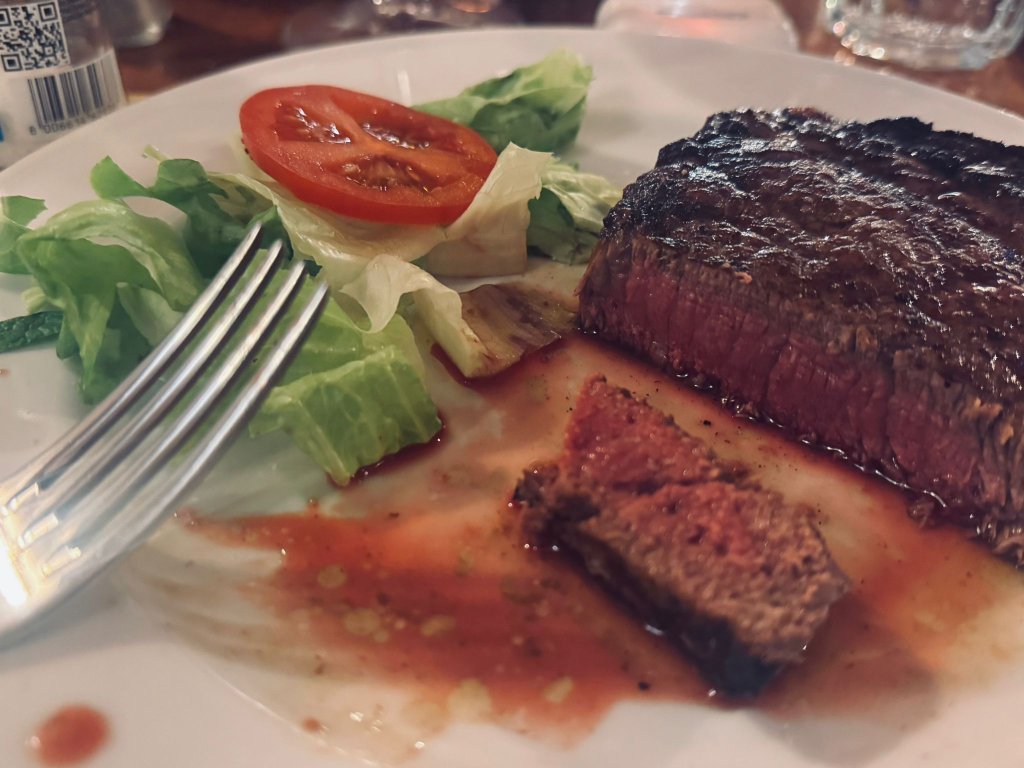
The food on a motorcycle tour matters more than most riders admit before they’ve done one. After six hours in the saddle, crossing a mountain pass in the rain, arriving cold and tired at a village hotel — the quality of what’s on the table that evening is not a small thing. It’s part of the whole experience. It’s what makes the day feel complete.
Italy and the border regions of France and Switzerland do this better than almost anywhere else on the continent. The food is serious without being precious. The wine lists in even small village restaurants are extraordinary by the standards of most of Europe. And there’s a culture around the evening meal — of taking time, of the table being a place for conversation and reflection — that pairs perfectly with the rhythm of a multi-day tour.
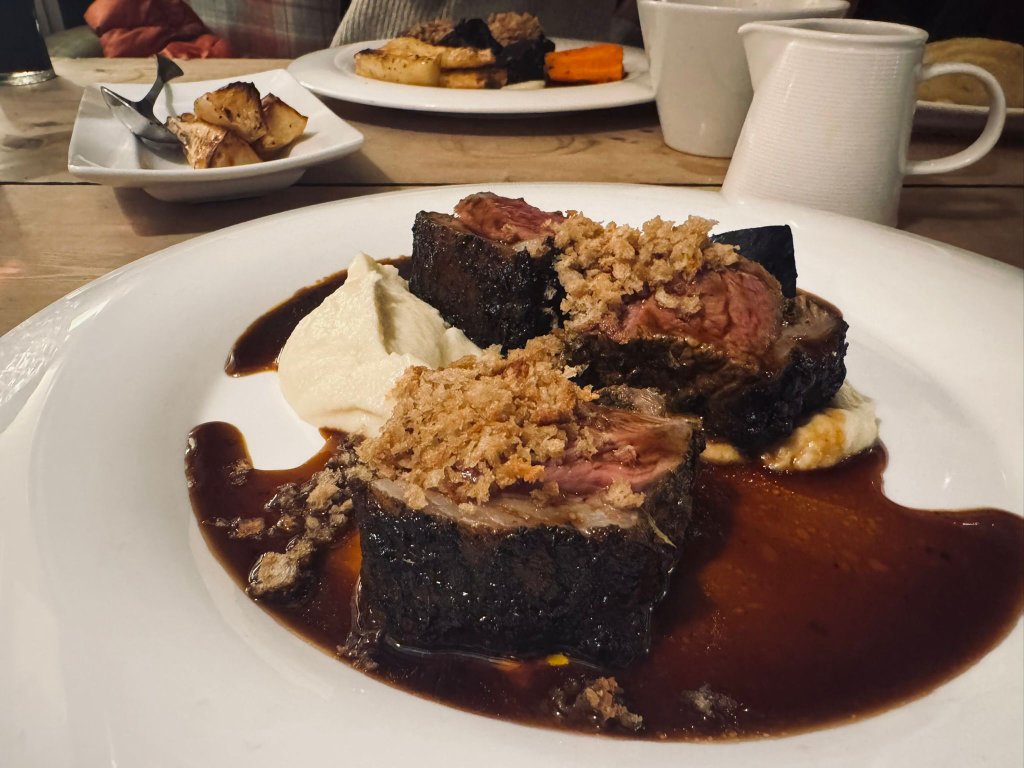
We choose accommodation on this tour for the restaurant as much as the rooms. Boutique hotels with proper kitchens, agriturismi that produce their own wine and olive oil, small mountain inns where the owner’s grandmother still does the cooking on a Thursday. It sounds indulgent, but it’s genuinely part of what makes the tour what it is.
The Rhythm of the Tour: What a Day Actually Looks Like
One of the things people ask most before joining a guided tour is: what’s the pace like?
The honest answer is that it’s purposeful but never rushed. You’re not here to cover ground for the sake of it. You’re here to experience the roads, the places, and the people. Which means the pace is set by what the day deserves, not by a schedule that needs to be maintained at all costs.
A typical day on the Twisties & Tuscan Sun tour might look something like this: breakfast at 8am, on the road by 9. A coffee stop mid-morning at a village bar in the mountains — proper Italian espresso, quick conversation about the road ahead, back on the bikes within 20 minutes. Lunch somewhere with a view: a terrace above a valley, a piazza in a hilltop town, a roadside spot that the guide knows from previous tours. Riding again in the afternoon, which on this tour tends to produce the best light and the best temperatures. Arriving at the hotel by early evening with time to shower, walk around the town, and be ready for dinner by 8.
It sounds simple, because it is. The best motorcycle tours don’t overcomplicate things. They find great roads, great places to stop, great places to sleep, and let the riding and the landscape do the work.
Why This Tour Works So Well as a Guided Experience
You could plan a route like this yourself. Many riders do — and they come back talking about how long it took to find the right roads, the right places to stay, the right restaurants, and how much time they spent navigating rather than riding.
The value of a guided tour isn’t just the logistics, though those matter. It’s the local knowledge that takes years to accumulate. Knowing that the Stelvio is best from the Prato side in the morning light. Knowing which trattoria in the Val d’Orcia serves the proper ribollita. Knowing the back road above Siena that avoids the tourist traffic and has a view that most visitors never see.
That’s what a well-run guided motorcycle tour gives you — not just a route, but the accumulated experience of someone who has ridden it many times and learned what makes it work.
Our groups are kept deliberately small. Small enough that you can ride in a natural formation, stop spontaneously when something is worth stopping for, and eat together at a table rather than being split across a restaurant. The group dynamic on these tours is one of the things riders mention most — the people you meet, the shared experience of riding these roads together, the evenings over wine talking about the day.
What Kind of Rider Is This Tour For?
The Twisties & Tuscan Sun tour is built for experienced road riders who want more than just a pleasant holiday. The Alpine passes and Dolomite roads require confidence at altitude — you need to be comfortable with mountain riding, sustained focus, and riding in varying conditions.
That said, this isn’t a track day. The pace is touring pace — purposeful but relaxed. You’re here to experience the roads and the places, not to set lap times. Riders who come on this tour range from those who’ve been doing European tours for years to those who are doing their first proper guided trip abroad. What they have in common is that they take their riding seriously and they want to do it properly.
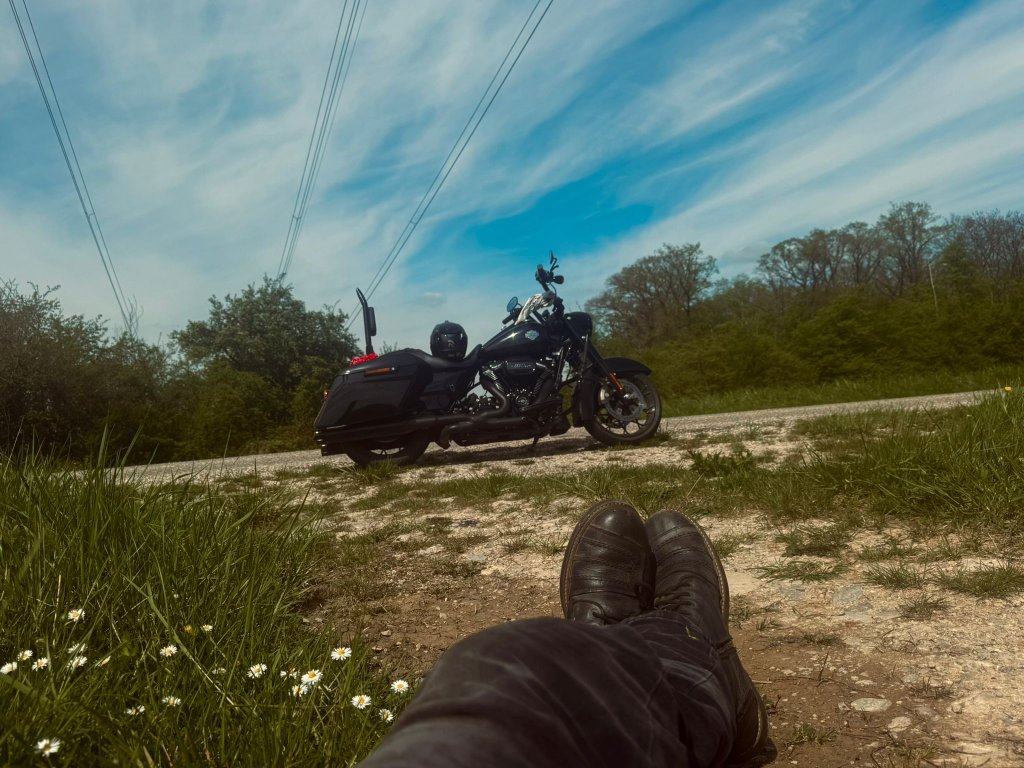
Most bikes work well on this route — adventure tourers, sports tourers, and naked bikes all handle the passes and the Tuscan roads comfortably. Harley-Davidson tourers are perfectly suited to the longer stretches and the coastal roads. If you’re unsure whether your bike is suitable, just ask.
Practical Details
Duration and distance
The tour runs for approximately 12–15 days depending on the specific itinerary. Daily riding distances typically sit between 200–350km — enough to cover serious ground and experience the route properly, without pushing into fatigue territory. Rest days are built in at key points, and the overall structure gives you time to actually be somewhere, rather than just pass through.
Accommodation
Accommodation on this tour is chosen for character as much as comfort. Boutique hotels in Alpine villages. Agriturismi in the Tuscan hills. Places with proper restaurants, local wine lists, and the kind of atmosphere that makes you want to linger over dinner. Nothing corporate. Nothing that could be anywhere.
When to go
The Alpine passes are typically clear from late May through to mid-October, with June, July and September being the best months for this tour. Late June and September offer the best combination of clear mountain passes, manageable temperatures in Tuscany, and fewer tourists at the key stops. Early season openings (late May) can still have snow at the very highest elevations — which makes for extraordinary photography, if not always the warmest riding.
Getting there
Most riders either ferry to France and ride down through Switzerland, or trailer their bikes and fly to the start point. Both work well. We can advise on the best approach depending on where you’re coming from and how much time you have. Some riders turn the journey down into part of the adventure — a few days riding through France before the official tour start, arriving at the Alps already properly warmed up.
This Is What Motorcycle Touring Is For
There are tours you do because the roads are good. There are tours you do because the scenery is spectacular. And then there are tours where everything aligns — the roads, the scenery, the culture, the food, the people — and the whole thing becomes something you talk about for years.
The Twisties & Tuscan Sun is that tour.
Check the 2027 tour calendar for dates, or download the full 2027 tour pack for the complete itinerary, route map and pricing. Or just fill in the form below and we’ll send everything directly to you.
Ride Free. Ride Wild. ✌️
Joshua James
Wild Roads Motorcycle Tours