Day 2: Fuente De to Villafranca del Bierzo — Picos & Pyrenees May 2026
📖 Day 2 · 22nd May 2026
Fuente De to Villafranca
del Bierzo
The cable car at Fuente Dé, sweeping mountain roads through the Picos, the high miradors of Pandetrave and Valdión, and pizza in the town square at Villafranca.
Some days on tour just flow. Everything clicks — the roads open up, the sun holds, the group finds its rhythm, and by the time you pull into the hotel you’re already talking about doing it all again. Day Two of our Picos & Pyrenees May 2026 tour was one of those days.
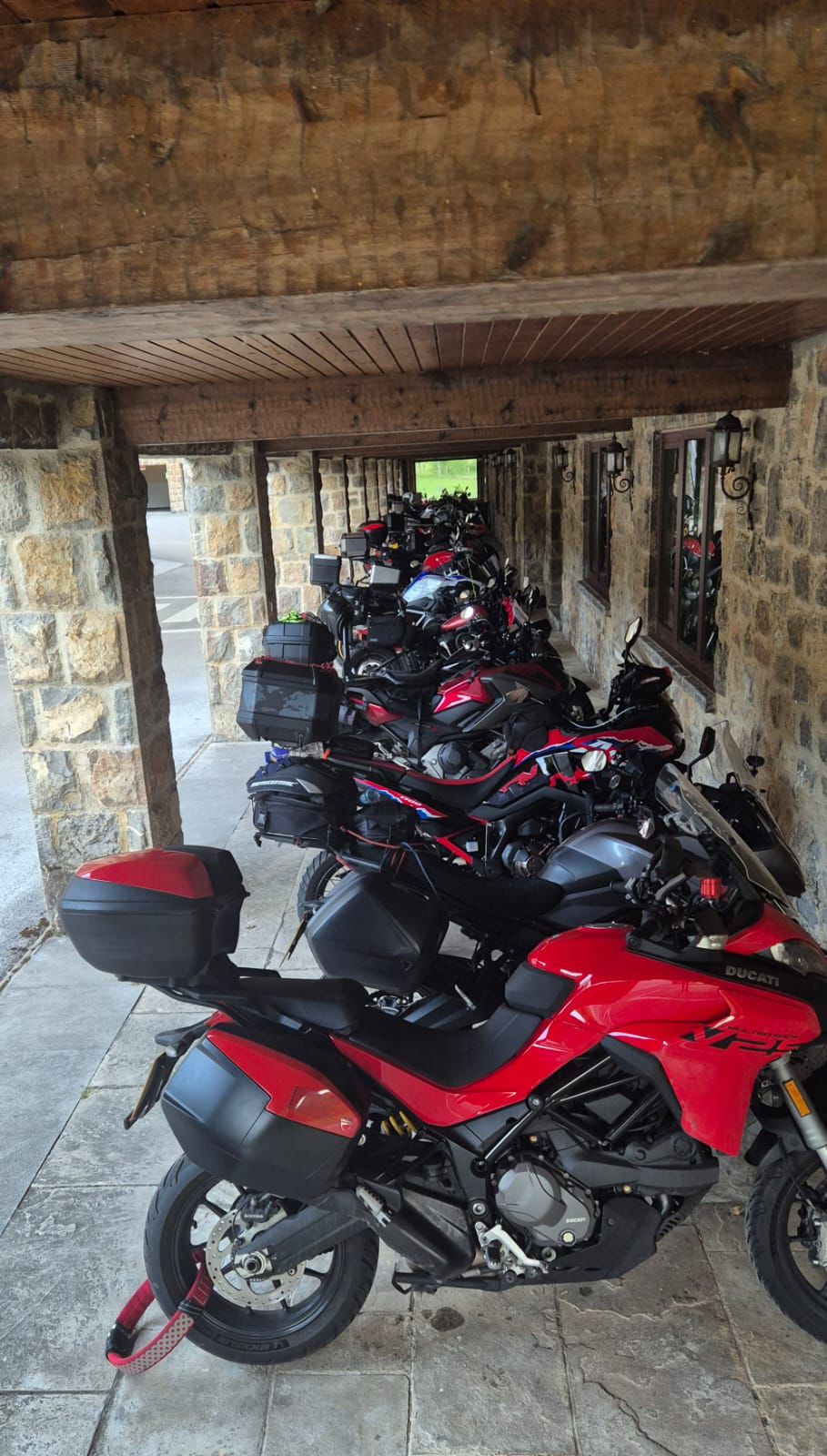
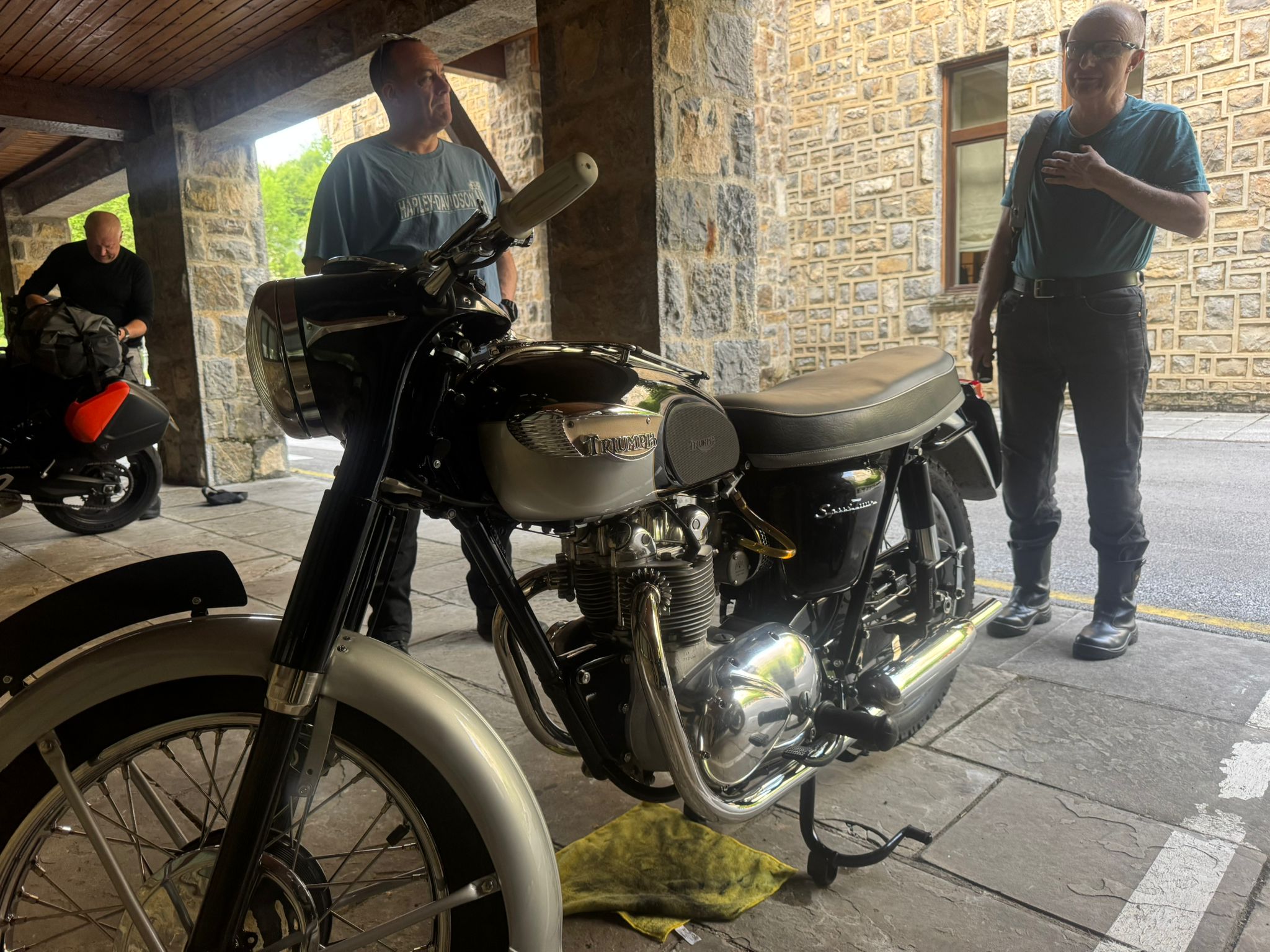
We’d slept well at the Parador de Fuente De — one of those places that earns its reputation without trying too hard. Stone walls, mountain air, and the kind of breakfast that sets you up properly for a big day in the saddle. By the time we’d loaded the bikes and had a proper look at what was waiting for us outside, the mood was good. The limestone walls of the Picos were already glowing in the morning light, and everyone was ready to ride.
Today’s Route
- Start: Parador de Fuente De
- Finish: Parador de Villafranca del Bierzo
- Distance: ~180 miles
- Riding time: Approx. 5–6 hours including stops
- Key roads: N-621 south through the Desfiladero de la Hermida gorge, CA-185 into the high valleys, LE-244 towards Boca de Huérgano, minor roads to Mirador de Pandetrave and Mirador de Valdión
- Fuel stop: Tama, just outside Potes
- Lunch: Authentic local restaurant in the high valleys
- Highlights: Mirador del Corzo, Llanaves de la Reina, Portilla de la Reina, Mirador de Pandetrave, Mirador de Valdión, Villafranca del Bierzo
Down From the Mountain
We rolled out of Fuente De and dropped down into the valley, the road unwinding ahead of us with those huge Picos walls on either side. There’s something almost cinematic about that descent — you feel tiny against the scale of the mountains, but in the best possible way. We pulled in for fuel at Tama, a small village just outside Potes, topped up the tanks and got ourselves ready for what we knew would be a proper day in the hills.
The N-621 and Mirador del Corzo
From Potes, we headed south on the famous N-621 — a road that genuinely deserves its reputation. This is one of the great motorcycle roads of northern Spain. It climbs steadily through narrow gorges, past small villages that look like they haven’t changed in a century, with the river rushing alongside you and the peaks rising sharply on both sides. Every corner reveals something new.
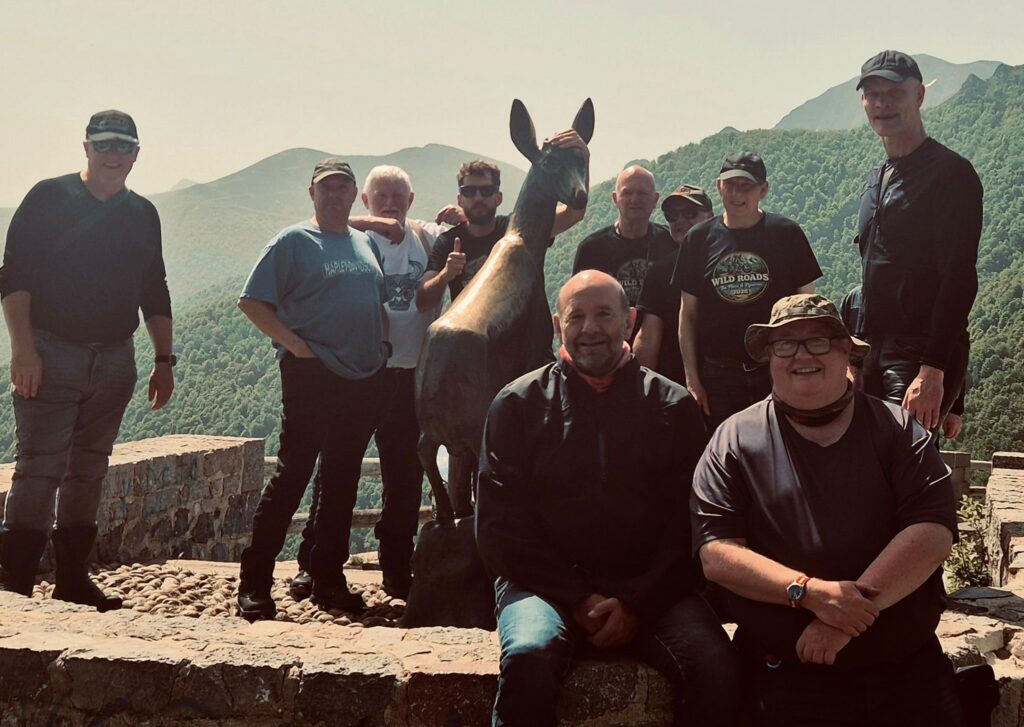
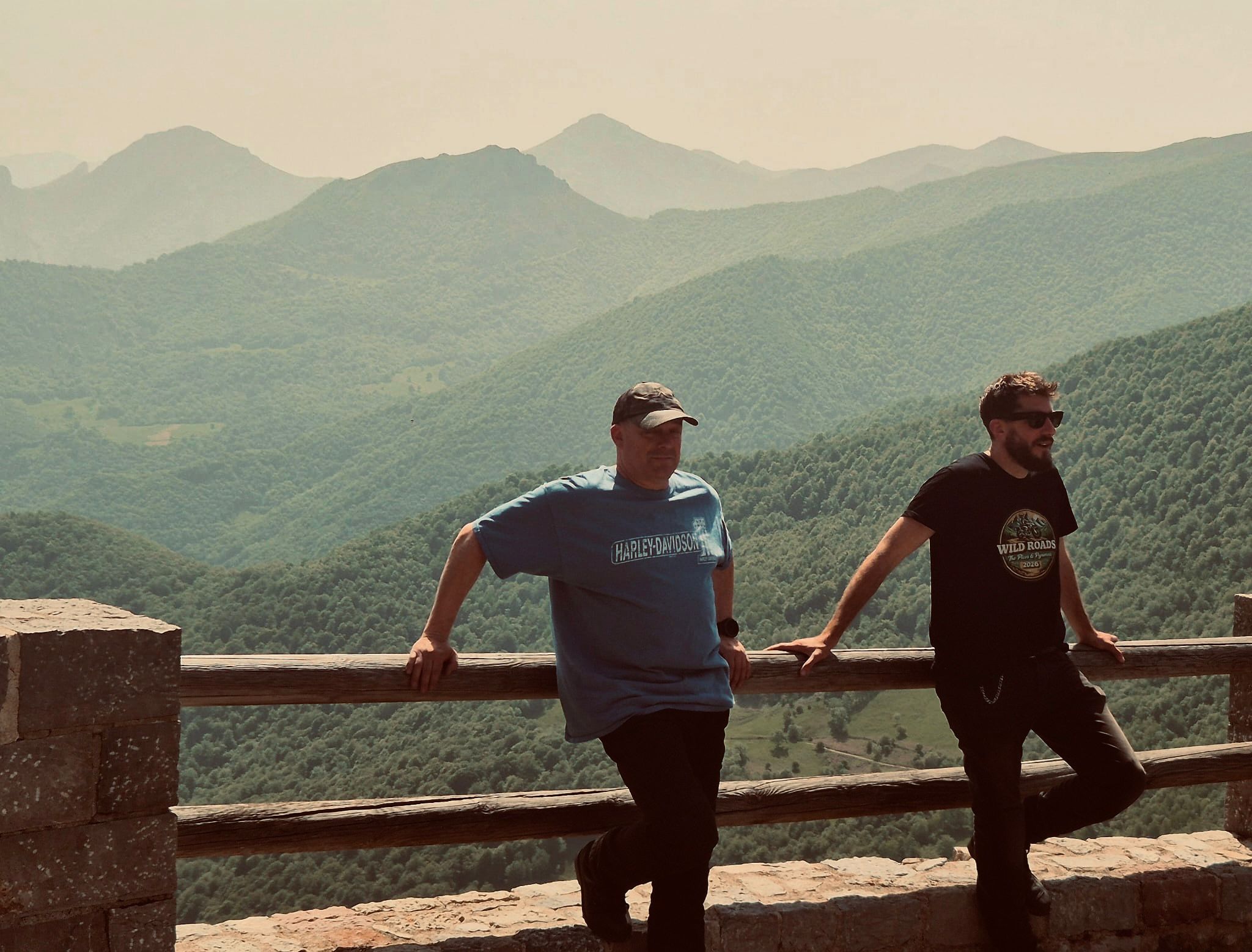
We made our first proper stop at Mirador del Corzo — a viewpoint that stops you in your tracks every single time. The group spread out along the wall, helmets off, nobody in any particular hurry to leave. That’s the thing about a spot like this — you can take a hundred photos and still feel like you haven’t captured it properly. The sheer scale of the Picos limestone, the green of the valleys below, the patches of snow still clinging to the higher peaks — it’s one of those views that reminds you exactly why you got on a motorcycle in the first place.
Into the High Valleys
After Mirador del Corzo we continued south, dropping into the next valley and passing through Llanaves de la Reina — a tiny, quietly beautiful village that sits at the foot of the Puerto de San Glorio pass. The road here is wide open, the kind of riding where you can settle into a rhythm and just enjoy the flow of the landscape around you.
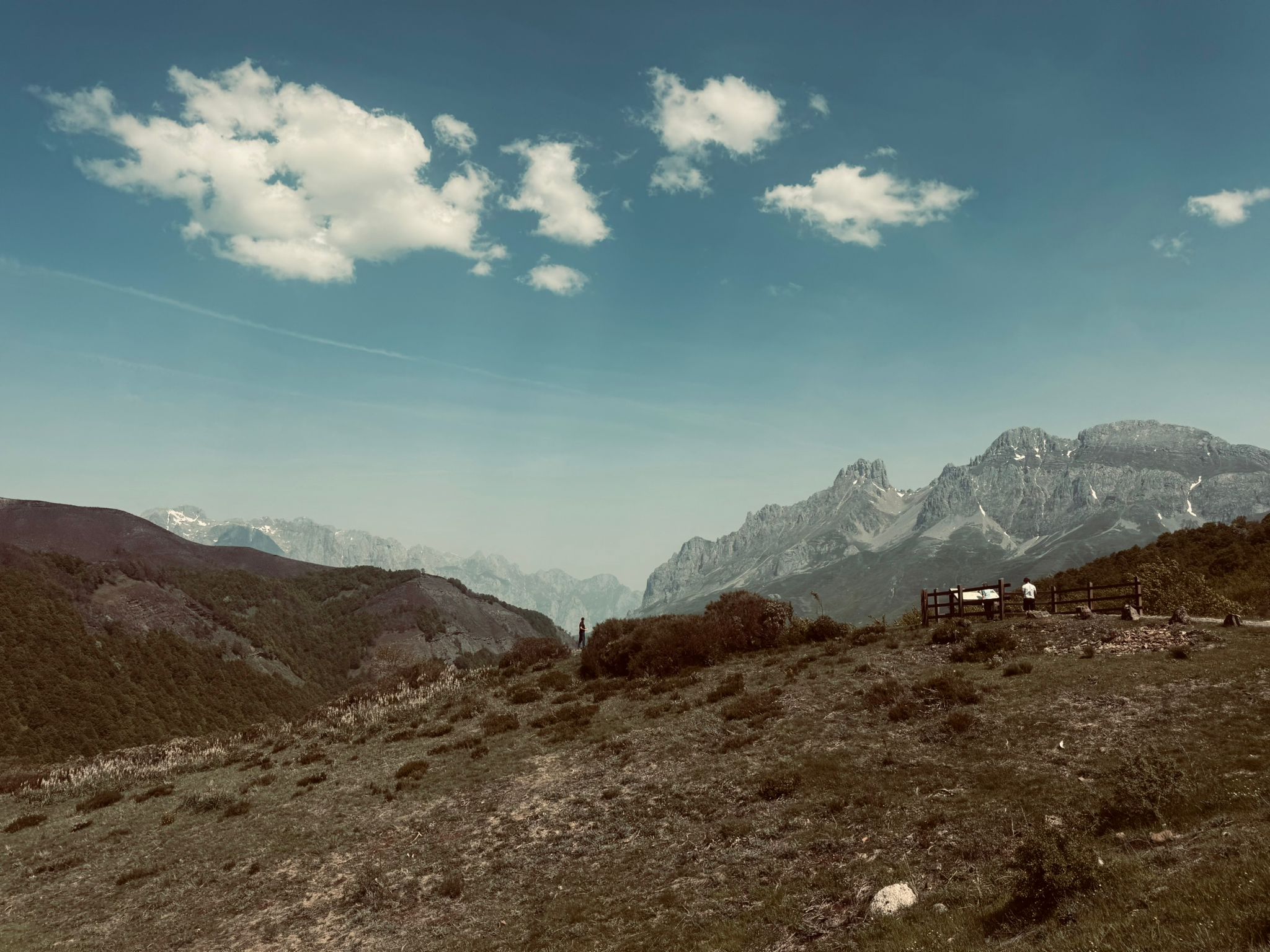
We pushed on to Portilla de la Reina and then turned north on a rougher, narrower road that climbed steeply up towards Mirador de Pandetrave. It’s not the smoothest surface in Spain, but honestly — it doesn’t matter. The road earns every bump. At the top, the view opens up in a way that genuinely catches you off guard. You turn a corner and suddenly there it is — a vast, sweeping panorama of the western Picos, ridge upon ridge, fading into the haze in the distance.
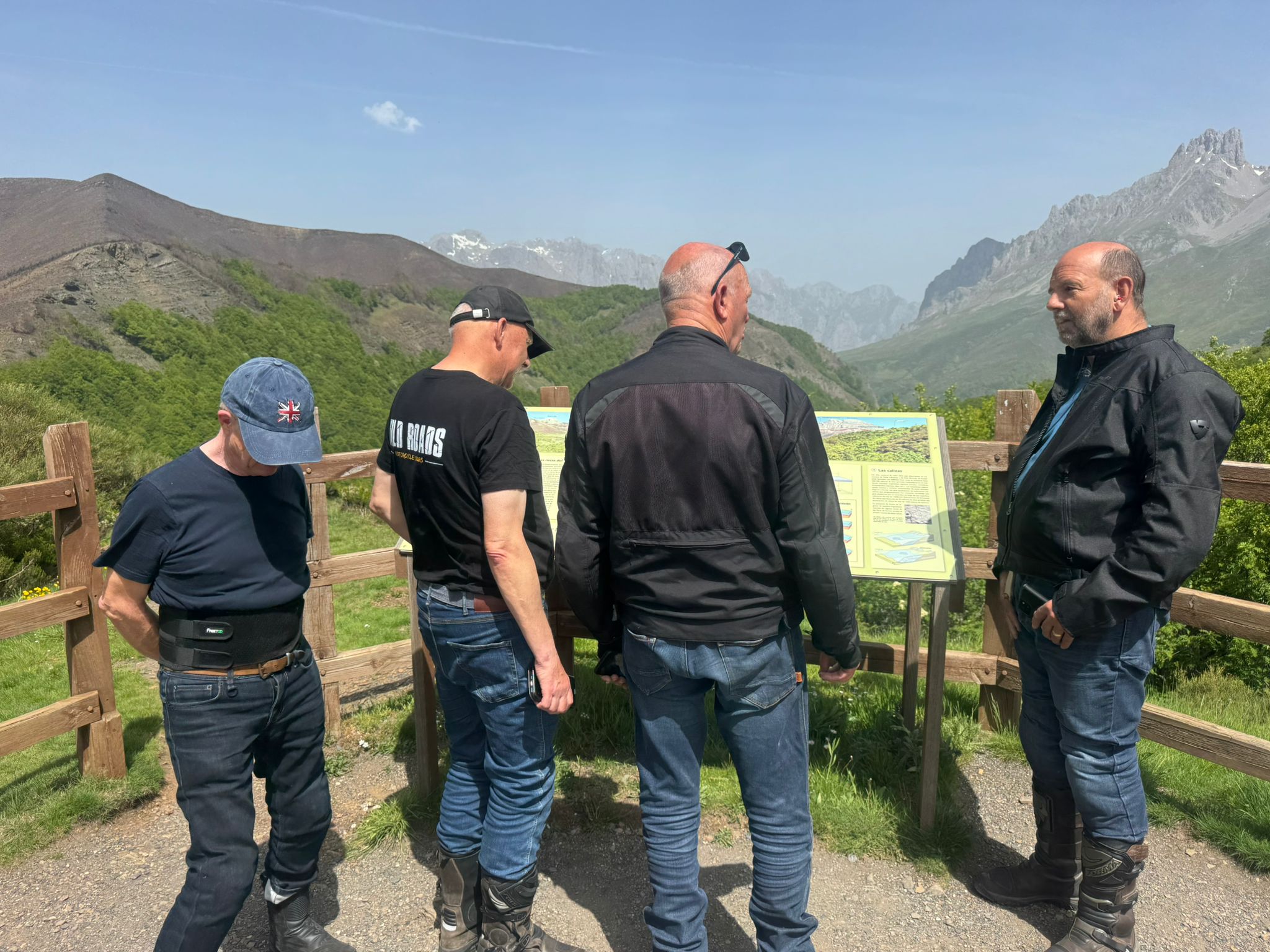
The group spent a good while at Pandetrave, reading the information boards, taking in the geology, debating which peak was which. One of those easy, unhurried stops that you only get when everyone in the group is on the same wavelength. From there we continued along to Mirador de Valdión — another cracking viewpoint, slightly less visited and all the better for it.
A Proper Lunch Stop
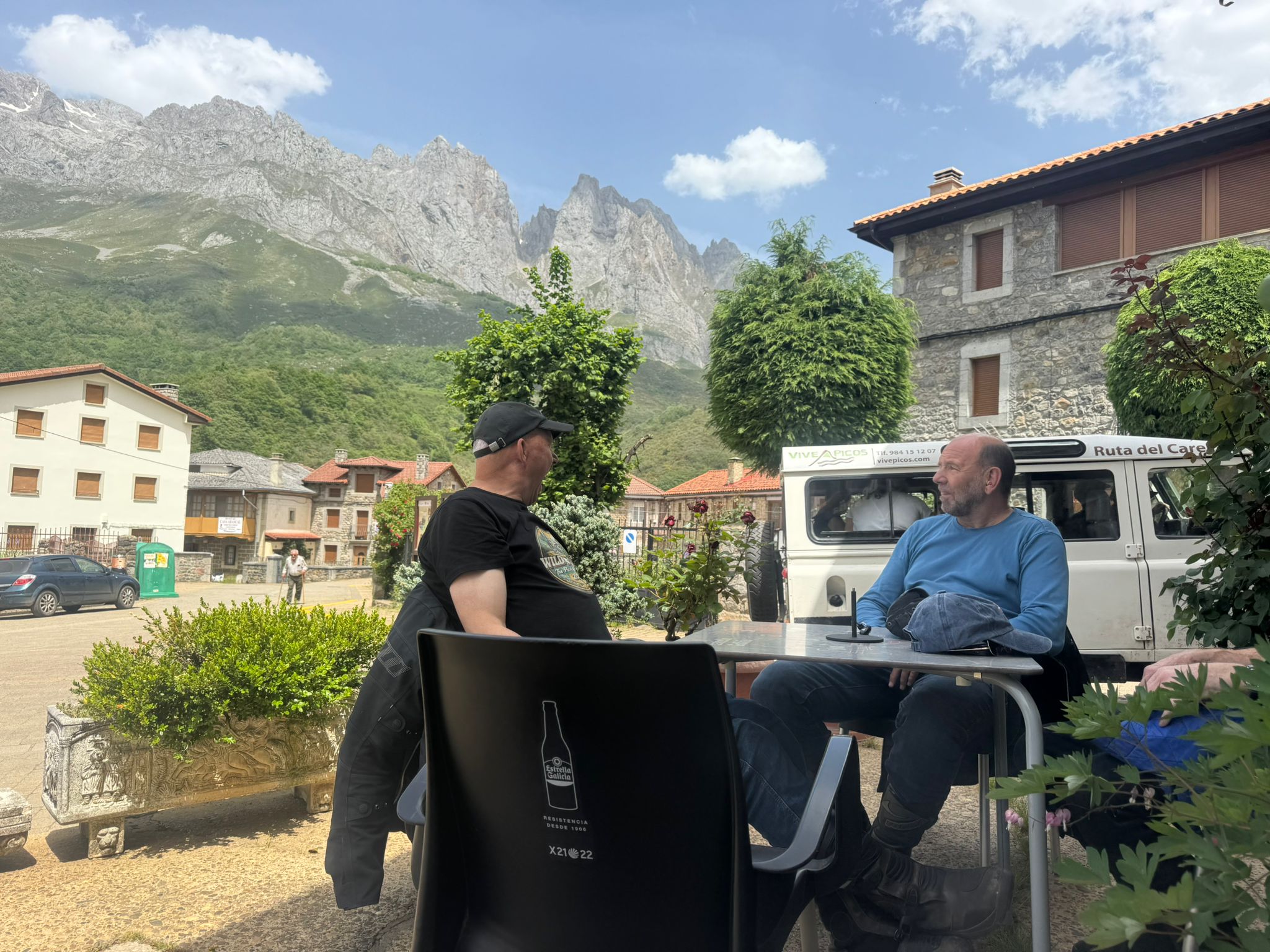
By the time we found our lunch spot — a proper, no-frills local place tucked into the valley — there was a healthy appetite around the table. This is one of those restaurants that doesn’t bother with a fancy menu or a tourist-friendly veneer. It’s just good food, generous portions, a cold beer, and a table full of riders who’ve earned it. The kind of place you’d never find without knowing where to look, which is kind of the whole point.
Unexpected Encounters on the Road
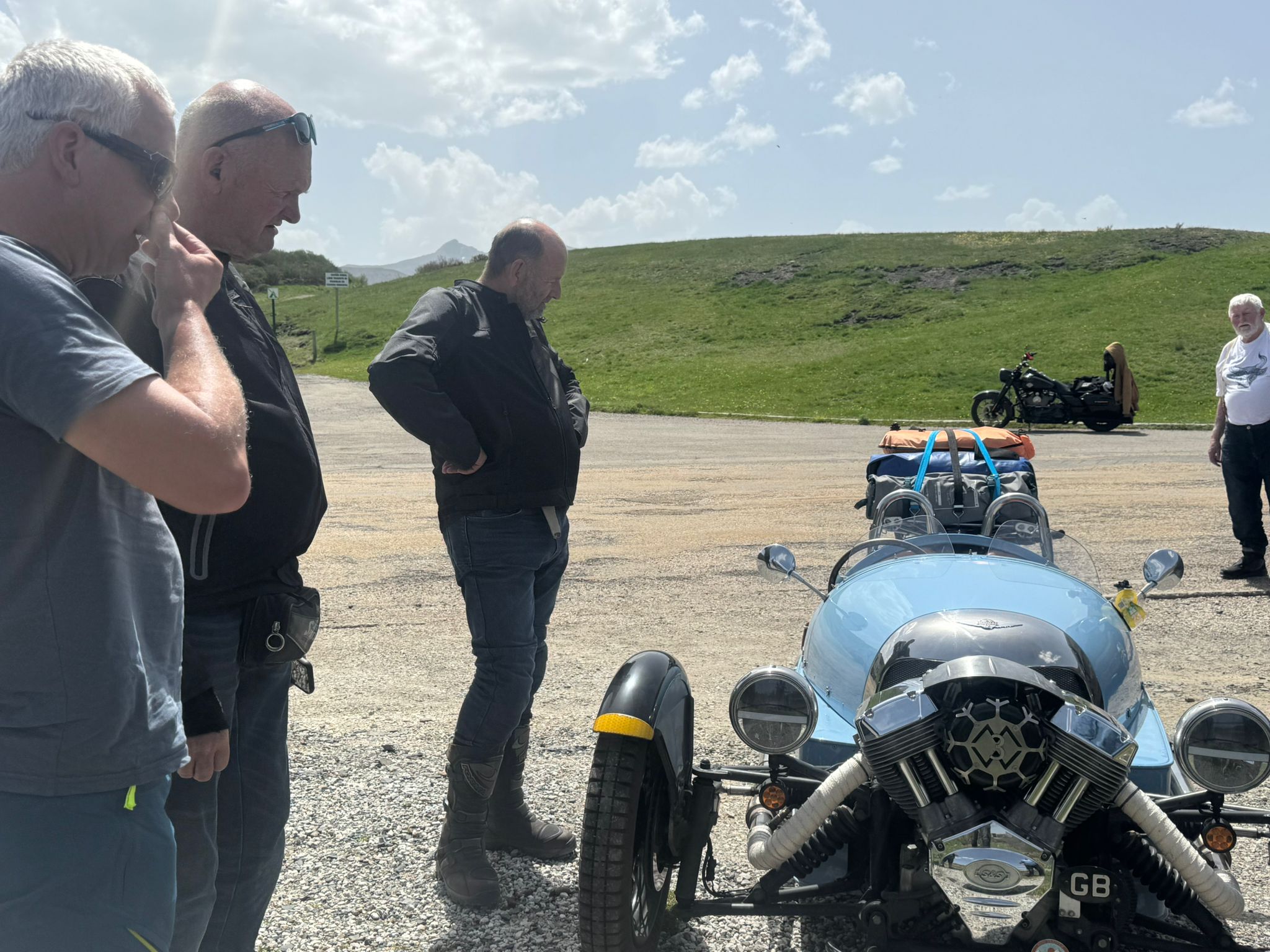
One of the things I love about these tours is that you never quite know what you’re going to find around the next corner. On the way through the mountains we came across a stunning Morgan 3-Wheeler parked up at one of the viewpoints — a proper head-turner that prompted an impromptu ten-minute conversation between the group and its owner. Turns out motorcyclists and Morgan drivers have a lot more in common than you’d think. Both utterly impractical, both completely worth it.
The Road to Villafranca del Bierzo
After lunch the riding continued to deliver. We gradually made our way westward, the landscape softening as we dropped out of the high Picos and into the broader valleys of the Bierzo region. The roads here are less dramatic than the mountain passes but no less enjoyable — long, flowing sweepers through forest and farmland, the kind of riding where you can just open it up a little and feel the miles rolling by.
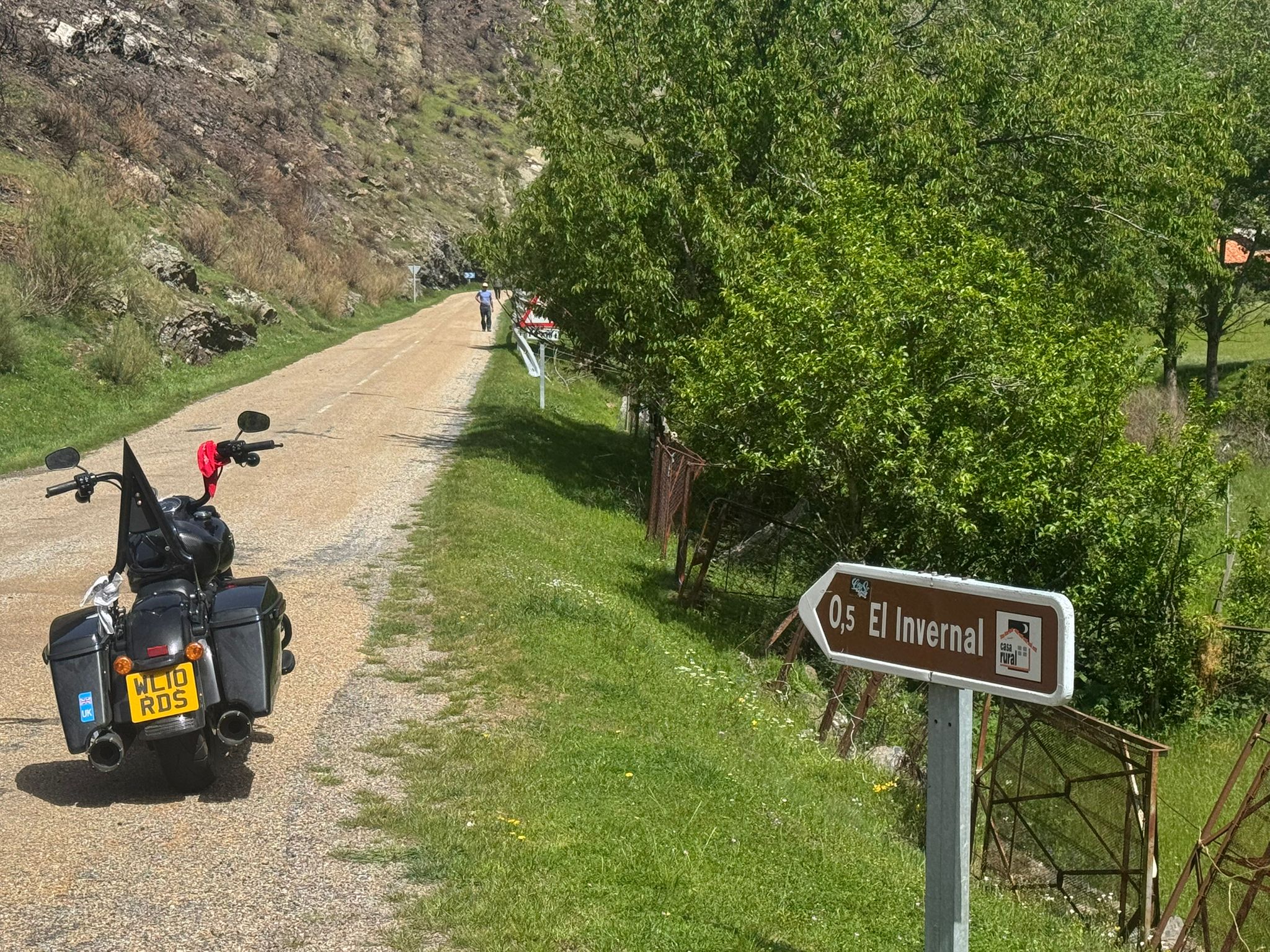
We arrived at the Parador de Villafranca del Bierzo in good time — bikes in, gear off, cold drink in hand. The parador sits just above the town, a solid, traditional building with the kind of terrace that was made for end-of-day debriefs. The group gathered, swapped stories from the road, and gradually unwound after a full day in the saddle.
Evening in Villafranca del Bierzo
As the sun started to drop, a few of us wandered down into the old town. Villafranca del Bierzo is one of those places that catches you by surprise — it’s a proper working Spanish town with a beautiful medieval quarter, cobbled streets, flower-draped balconies, and a relaxed evening atmosphere that you don’t get in tourist-heavy places.
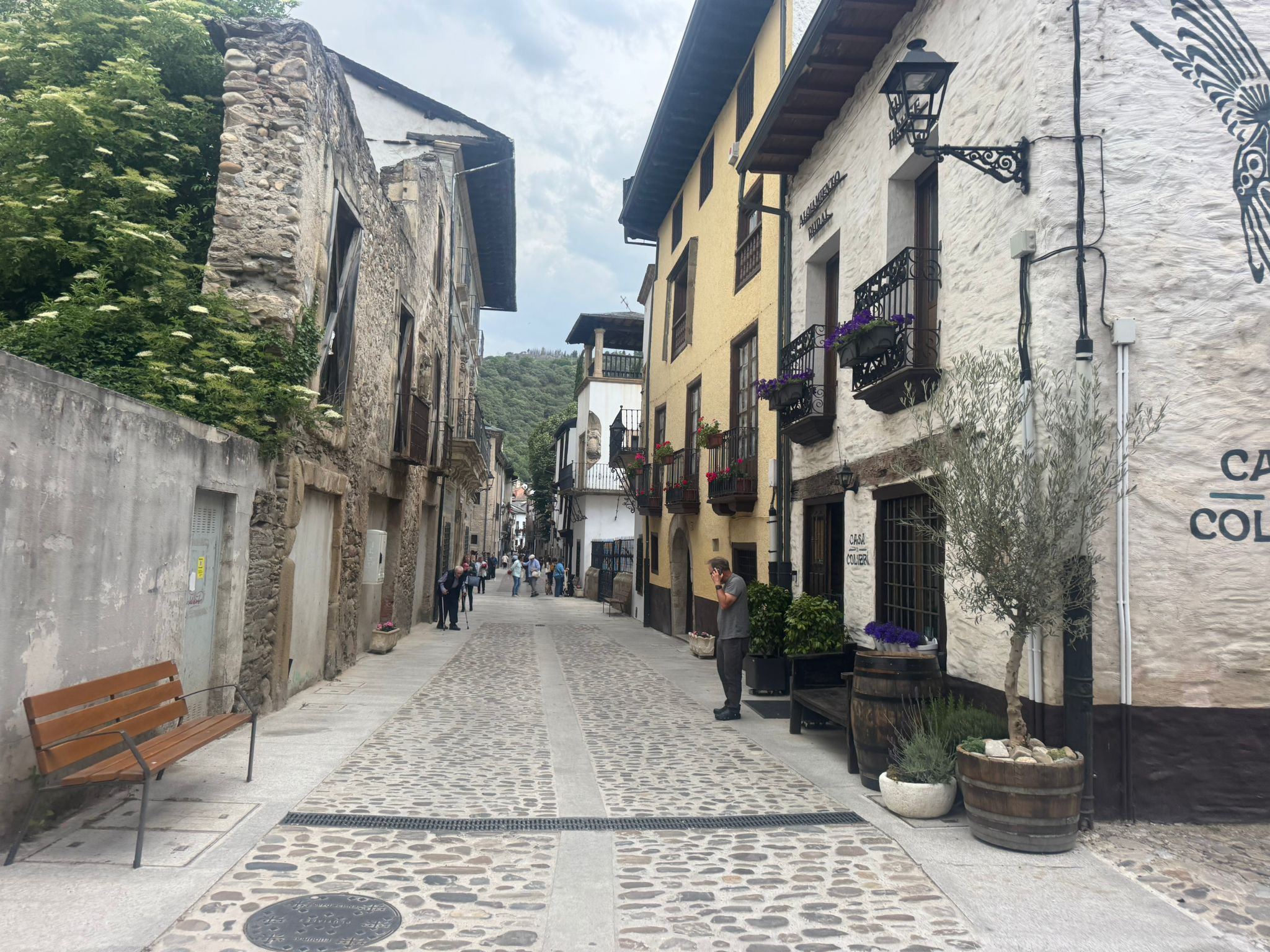
We found a spot in the town square and sat down for pizza — proper, wood-fired, surrounded by locals going about their Friday evening. It was one of those simple, perfect endings to a day on the road. No fuss, no searching for the “right” restaurant — just good food, good company, and a square full of life. What a lovely day.
Tomorrow
Day Three takes us further west — out of the Bierzo and into Galicia, one of the most atmospheric and underrated corners of northern Spain. We’re heading for the kind of roads that the region is famous for: green, winding, with that distinctive Galician mist hanging over the hills. More to come.
Ride This Route Yourself
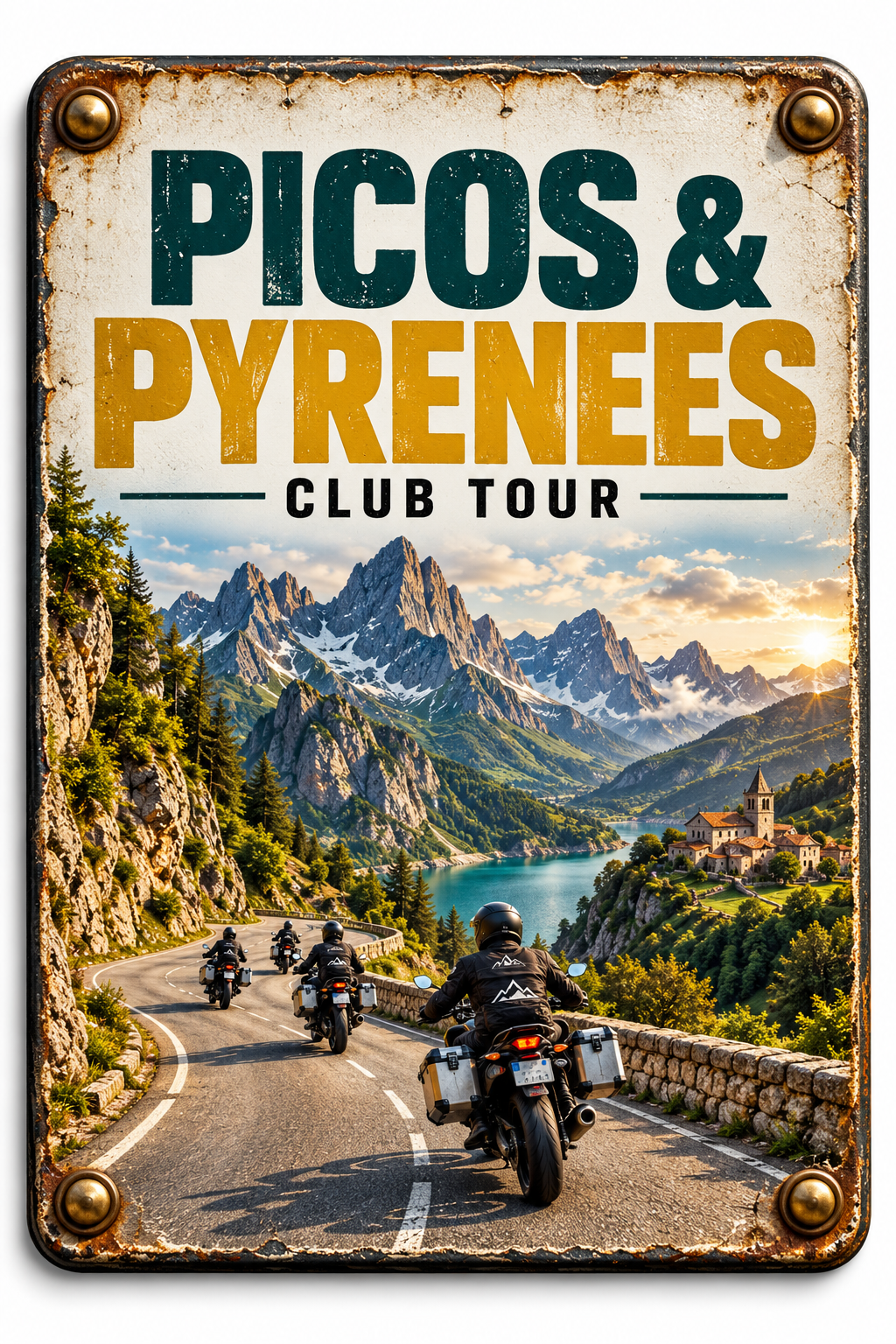
This ride forms part of our Picos & Pyrenees guided motorcycle tour — a 15-day journey through northern Spain that takes in the Picos de Europa, Galicia, the Basque Country, and the Pyrenees. It’s one of the most varied and rewarding motorcycle routes in Europe, and one of our most popular tours year after year.
If reading this has you reaching for your helmet, we’d love to have you along. Take a look at the Picos & Pyrenees tour page for full dates, pricing and what’s included — or browse our full range of guided motorcycle tours across Europe. You can also check out the full diary for this trip to follow the whole journey from Day 1.
FAQ: Riding the Picos de Europa by Motorcycle
What is the best road for motorcycle touring in the Picos de Europa?
The N-621 between Potes and Riaño is consistently rated one of the best motorcycle roads in northern Spain — a mix of gorge riding, open valley sweepers, and mountain passes. The minor roads to viewpoints like Mirador de Pandetrave and Mirador del Corzo add extra depth for riders who want to explore off the main route.
Is the Picos de Europa suitable for large touring bikes?
Absolutely. The main routes are well-surfaced and handle large tourers, adventure bikes and cruisers without issue. Some of the minor mirador roads are narrower and slightly rougher, but nothing that a loaded touring bike can’t handle comfortably at a sensible pace.
How long should you spend riding in the Picos de Europa?
Two full days is the minimum to do the Picos justice — one to cover the eastern massif and the Desfiladero de la Hermida gorge, another to explore the high passes and western valleys. On our guided tour we spend three days in the area, which gives you time to actually stop, explore, and soak it in rather than just passing through.
When is the best time to ride northern Spain by motorcycle?
Late May through to early October is the sweet spot. May and June offer green landscapes, fewer tourists, and snow still visible on the highest peaks — dramatic and photogenic. July and August are warmer but busier on the main routes. September is arguably the best month of all: quieter, golden light, and the weather still reliably good.
What is Villafranca del Bierzo like as a stop on a motorcycle tour?
Villafranca del Bierzo is a hidden gem on the old Camino de Santiago route — a medieval town with cobbled streets, a well-preserved old quarter and a genuine local atmosphere. It’s an ideal overnight stop on a westward journey through northern Spain, well-positioned between the Picos and Galicia with good accommodation, food and a relaxed evening vibe.
Join Us on Tour
There’s nothing quite like experiencing roads like these with a group of like-minded riders, with all the logistics taken care of and a local guide who knows every corner. Wild Roads Motorcycle Tours runs small-group guided tours across Europe — from northern Spain and the Picos de Europa to the Alps, Dolomites, Morocco and beyond.
If the Picos & Pyrenees tour has caught your eye, we’d love to hear from you. Fill in the form below and we’ll send you a full tour pack with everything you need to know — routes, pricing, what’s included, and how to secure your spot.
Ride This Route Yourself
If this diary has put northern Spain on your radar, we’d love to have you along. The Picos & Pyrenees tour runs across multiple dates — small group, fully guided, all logistics handled. Fill in the form below and we’ll send you the full tour pack.