The conversation usually starts the same way.
Someone mentions they’re planning a European motorcycle tour. Then, almost inevitably, they do the maths on flights, hotels, ferries, fuel. And suddenly they’re looking for ways to cut costs.
“Maybe I don’t need new riding gear. My current jacket is fine.”
“Do I really need quality luggage? I could just strap some bags on.”
“Those premium boots are expensive — these cheaper ones look the same.”
I get it. A thousand-mile motorcycle journey is expensive. Every pound counts.
But here’s what I’ve learned after 20 years of motorcycle touring — the cost of cheap gear isn’t the upfront savings. It’s everything that comes after.
And if you’re planning a guided motorcycle tour in 2027, getting your kit sorted now is one of the smartest things you can do before the start date.
The Real Cost of Bad Gear
What “fine” actually means
When most riders say their current jacket is “fine,” what they really mean is — “I’ve worn it around town and it’s been okay.”
That’s not the same as being fine for a thousand miles of European riding.
Town riding and long-distance touring are completely different demands on your gear:
- Town riding = short trips, lower speeds, predictable conditions. You’re never more than ten minutes from home.
- Touring = eight, ten, twelve hours in the saddle. Rain. Wind. Temperature swings from 5°C in the mountains to 25°C in the valley. Gravel roads. Unpredictable conditions. Emergency stops. Crashes.
A jacket that’s “fine” for commuting will kill your comfort on hour six. Seams rub. Zips jam. Ventilation fails. You’ll be cold, then hot, then exhausted — sometimes all three within the same hour.
And exhausted riders make bad decisions. Bad decisions lead to crashes.
The chain reaction nobody talks about
Let me walk you through what actually happens on a long-distance tour with the wrong kit.
You start your tour in a jacket that felt fine in the shop. By day three, your shoulders are raw from the seams. You’re uncomfortable enough that you stop more frequently — that costs time and money.
By day five, a seam starts failing. It’s not broken yet, but it’s visibly fraying. You’re anxious. You’re checking it constantly. That’s mental load you don’t need when you’re navigating mountain passes.
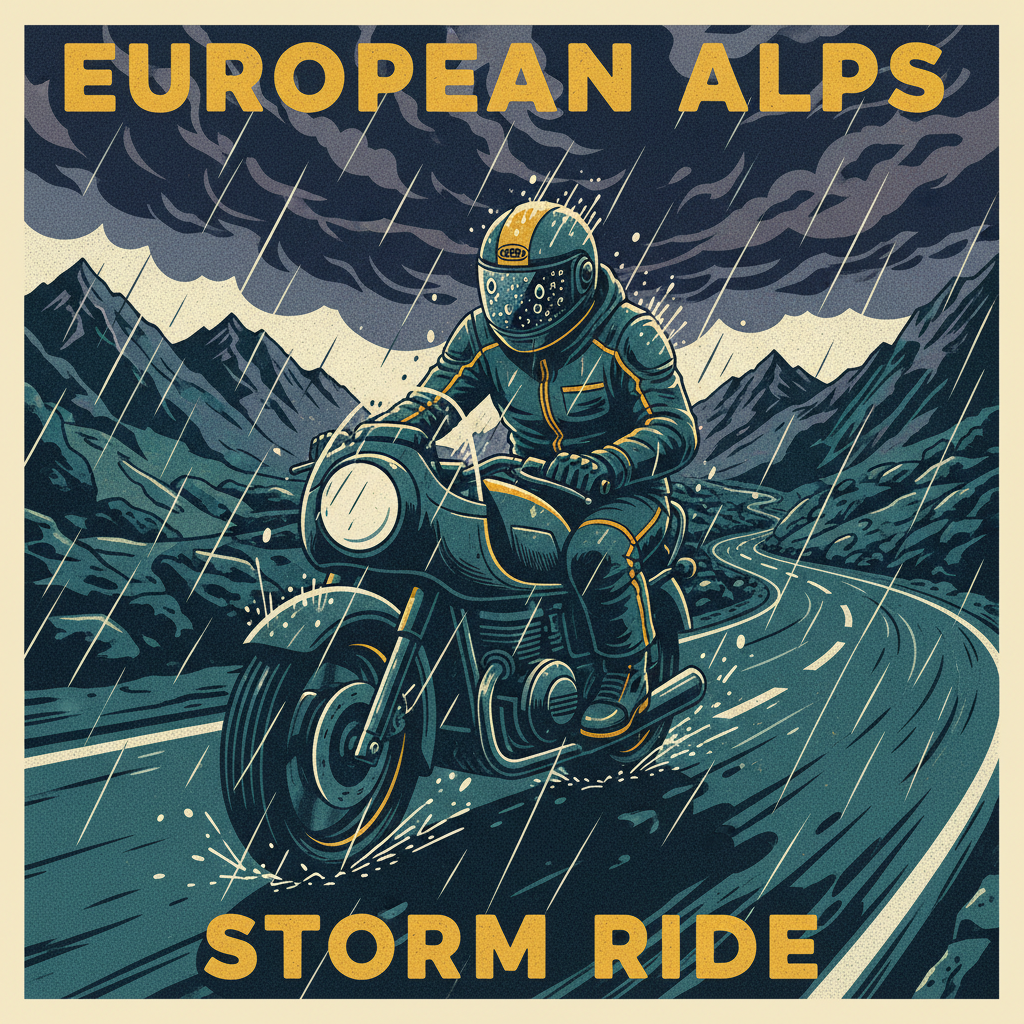
On day eight, you hit unexpected rain. The jacket’s waterproofing — which was mediocre to start with — has degraded. Water gets in. You’re wet, cold, your body temperature drops, your reaction times slow, your decision-making deteriorates.
On day nine, because you’re fatigued and cold and your judgment is compromised, you miss a turn. You ride too hard into a corner. You go down.
That’s not a horror story. That’s a pattern. It happens to riders every season.
And it all started because someone saved £150 on a jacket.
What Good Gear Actually Gives You
Comfort is a safety feature
This is the bit that gets missed in every gear conversation. People talk about protection — CE ratings, armour, abrasion resistance. All of that matters. But comfort is just as critical on a long tour.
A comfortable rider is a focused rider. A focused rider makes good decisions. Good decisions keep you on the road and off the tarmac.
Quality gear is designed for long days. The fit accounts for riding position, not just standing. The ventilation systems actually work. The waterproofing holds at motorway speeds in sustained rain. The seams are placed where they don’t create pressure points after six hours.
You stop less. You arrive less tired. You enjoy the riding more. That’s not a luxury — that’s the whole point of a motorcycle tour.
The gear that actually earns its price tag
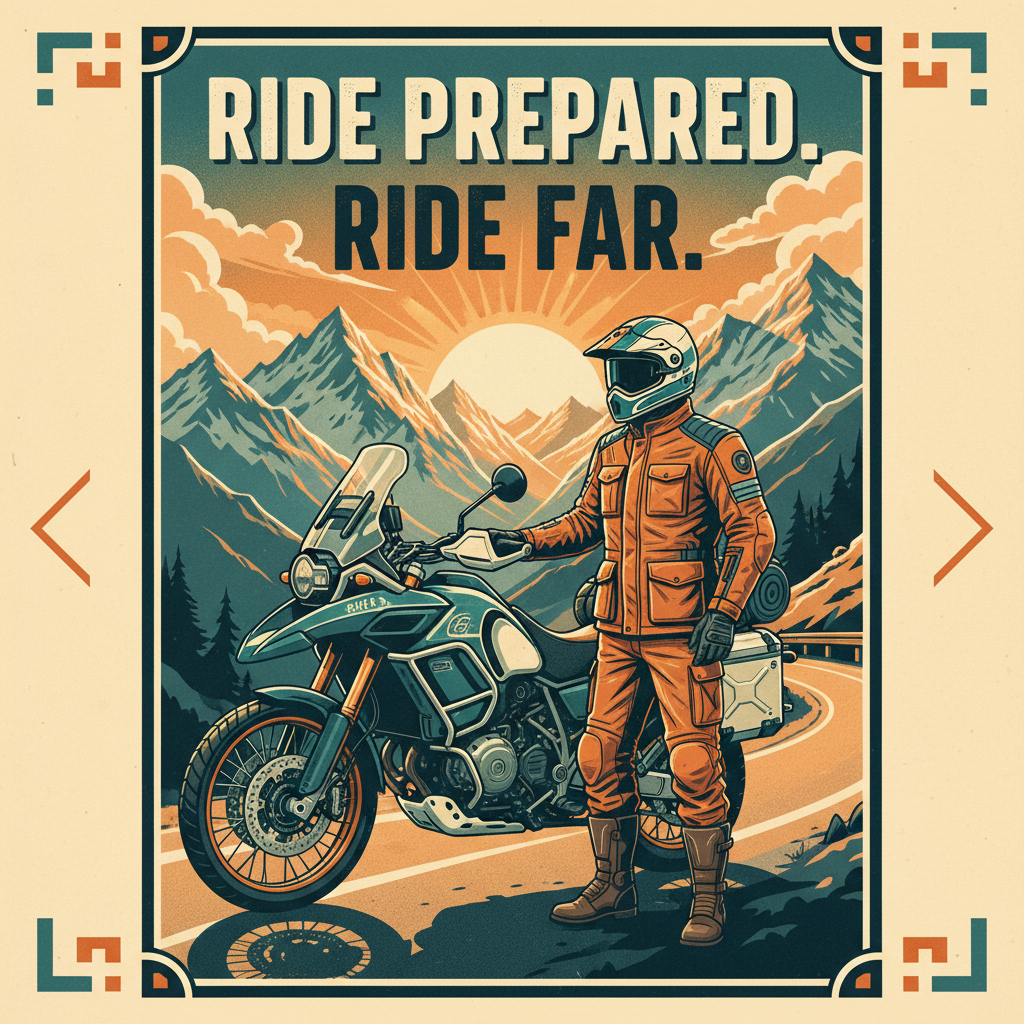
After years of touring and watching riders on our trips, here’s what consistently makes the difference:
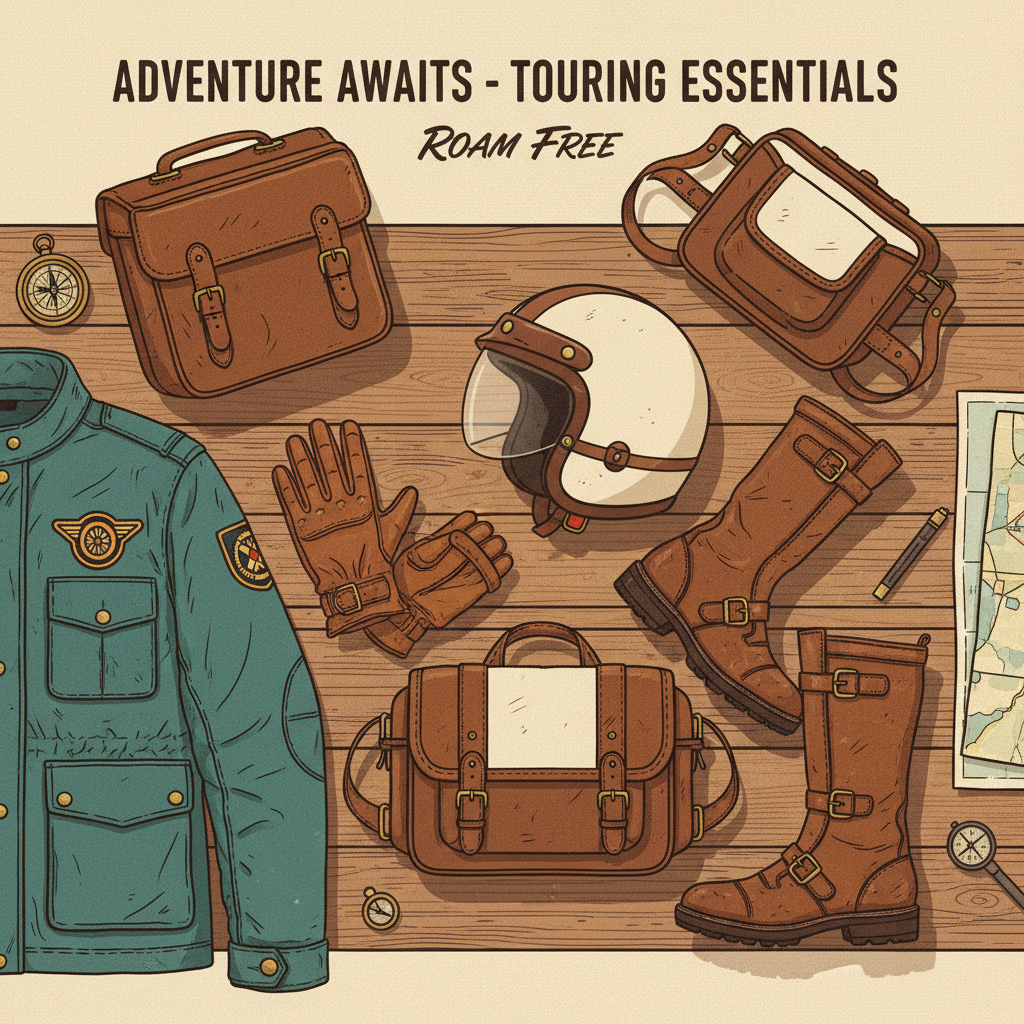
Jacket
A quality adventure touring jacket with genuine waterproofing (not a spray-on coating that wears off after two washes), proper CE-rated armour at the shoulders and elbows, and a zip-in thermal liner. Budget: £300–£600. Brands like Rukka, Klim, REV’IT and Alpinestars consistently hold up on multi-week tours. You will use it for ten years. The cost per tour is almost nothing.
Helmet
Do not compromise here. Ever. A mid-range helmet from a reputable brand — Shoei, Arai, AGV, HJC — will be noticeably quieter, better ventilated and more comfortable over a full day of riding than a budget lid. Noise fatigue is real. After eight hours, a noisy helmet leaves you exhausted. Budget: £350–£700.
Boots
Waterproof, ankle-supporting touring boots. This is the one piece of gear most riders under-invest in — and the one they regret most. Wet feet on day one ruins the whole tour psychologically. Sidi, TCX, Gaerne and Alpinestars all make excellent touring boots that will genuinely keep your feet dry and protect your ankles. Budget: £150–£350.
Gloves
Bring two pairs minimum — summer gloves and waterproof winter gloves. European mountain passes can drop to near-freezing even in July. Cold hands affect your throttle control and brake response. This is not a minor comfort issue. Budget: £50–£150 per pair.
Luggage
Proper panniers or soft luggage with genuine waterproofing. Anything strapped with bungees or in non-waterproof bags is a gamble. Quality luggage also reduces vibration fatigue and keeps weight distributed correctly — which affects handling, especially on mountain roads. Budget: £200–£500 for a solid setup.
For a more detailed breakdown of what to budget for a European motorcycle tour — including gear, accommodation and fuel — check out our full guide on motorcycle touring gear costs and real value.
The Maths Nobody Does
Let’s run the actual numbers, because this is where the “gear is expensive” argument completely falls apart.
A quality touring jacket costs £400. You use it for ten years, averaging two tours a year. That’s £20 per tour. Per day on a two-week tour? £1.43.
A quality helmet at £500, used over seven years, two tours a year: £35 per tour. £2.50 per day.
Quality boots at £250, lasting eight years: £15 per tour. Just over £1 per day.
Your total daily gear cost for a properly kitted rider: approximately £6–£8 per day.
You’re spending more than that on coffee every morning.
Compare that to the cost of a single crash. The average motorcycle accident in Europe results in £3,000–£8,000 in costs when you factor in medical bills, bike repairs, travel rearrangement and missed tour days. A single bad outcome wipes out a decade of “savings” on cheap gear.
The maths is not complicated. Quality gear is the cheapest thing on your tour when you calculate it correctly.
What We See on Our Tours
After running motorcycle tours across Europe for years, there is a clear pattern among the riders who have the best experiences and those who struggle.
The riders who invest in good kit arrive at camp energised. They’re talking about the roads. They want to do it again tomorrow. They’re already asking about next year.
The riders who cut corners on gear arrive tired, sometimes wet, often irritable. By mid-tour, they’re suffering. By the end, they’re just glad it’s over. Not because the route was wrong or the tour was badly run — but because they were uncomfortable the entire time.
This is why, when riders ask us what to prepare before joining one of our 2027 motorcycle tours, gear is the first conversation we have. Not fitness. Not route knowledge. Not bike prep. Gear.
Because everything else can be worked around. Bad gear on a two-week tour cannot.
How to Approach Your Gear Investment
If you’re starting from scratch or upgrading ahead of a big tour, here’s how I’d approach it:
- Prioritise protection and waterproofing first. A quality jacket with proper armour and waterproofing is the single most impactful purchase you can make. Everything else builds from there.
- Buy the best helmet you can afford. This is not negotiable. Noise and comfort at motorway speeds over a full day makes a huge difference to your safety and enjoyment.
- Do not cheap out on boots. This is the most common mistake. Wet feet on day one is demoralising in a way that compounds across the whole trip.
- Think in cost-per-day, not upfront price. Every quality gear purchase, when amortised over its lifespan, costs almost nothing per riding day.
- Buy once, buy right. The riders who upgrade every few years because their cheap gear keeps failing spend more in the long run than those who invested properly once.
If you want a full packing and gear checklist ahead of a Wild Roads tour, our 2027 Tour Pack includes everything you need to know about what to bring, what to leave at home, and how to prepare for different European riding conditions.
Ready to Put That Gear to Work?
There’s only so much satisfaction in having the best kit sitting in your garage. The whole point is to use it — on proper roads, through proper mountain passes, with a group of riders who understand exactly why you invested in the good stuff.
If 2027 is the year you finally do it properly — great gear, great route, well-organised adventure without the rigid structure of a traditional guided tour — we’d love to have you along. Take a look at what we have planned, fill in the form below and we’ll send you the full 2027 tour pack with routes, dates, pricing and everything else you need to make a decision.
Ride Free. Ride Wild. ✌️
Joshua James
Wild Roads Motorcycle Tours