Day 9: Montory to San Sebastián — Picos & Pyrenees May 2026
📖 Day 9 · 29th May 2026
Montory to San Sebastián
A secret Pyrenean pass, a sea of clouds, Saint-Jean-Pied-de-Port, and tapas by the ocean.
Bags On, Montory Behind

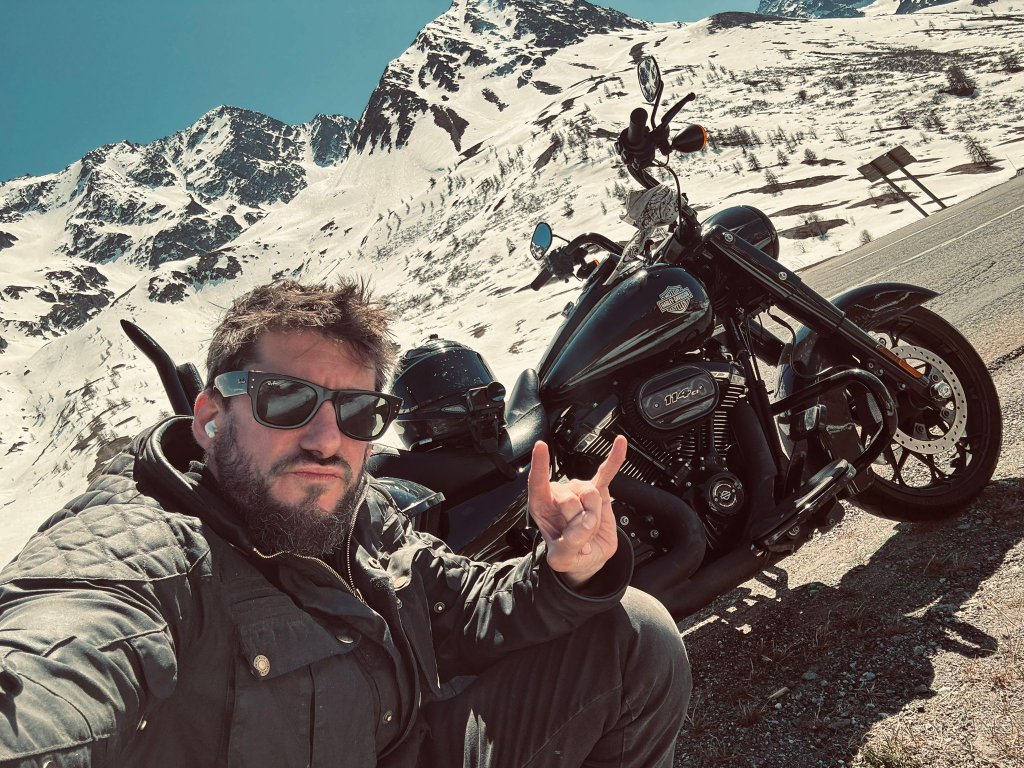
Bags on, jackets zipped. The fleet lines up outside the hotel on a grey Montory morning. What awaits above the clouds is worth every bit of it.
After two nights in Montory it was time to move again. Bags strapped, tanks fuelled, the group assembled in the hotel car park under an overcast sky. That low grey lid sitting over the valley is one of the more deceptive things about riding in the Pyrenees in late May — because above it, things are very different.
The route out of Montory climbed immediately. This is one of the characteristics of the Soule valley: there is almost no flat ground. You leave the village and the road starts rising almost at once, the tarmac narrowing as the altitude increases and the trees thin out into open mountain pasture.
The Secret Pass

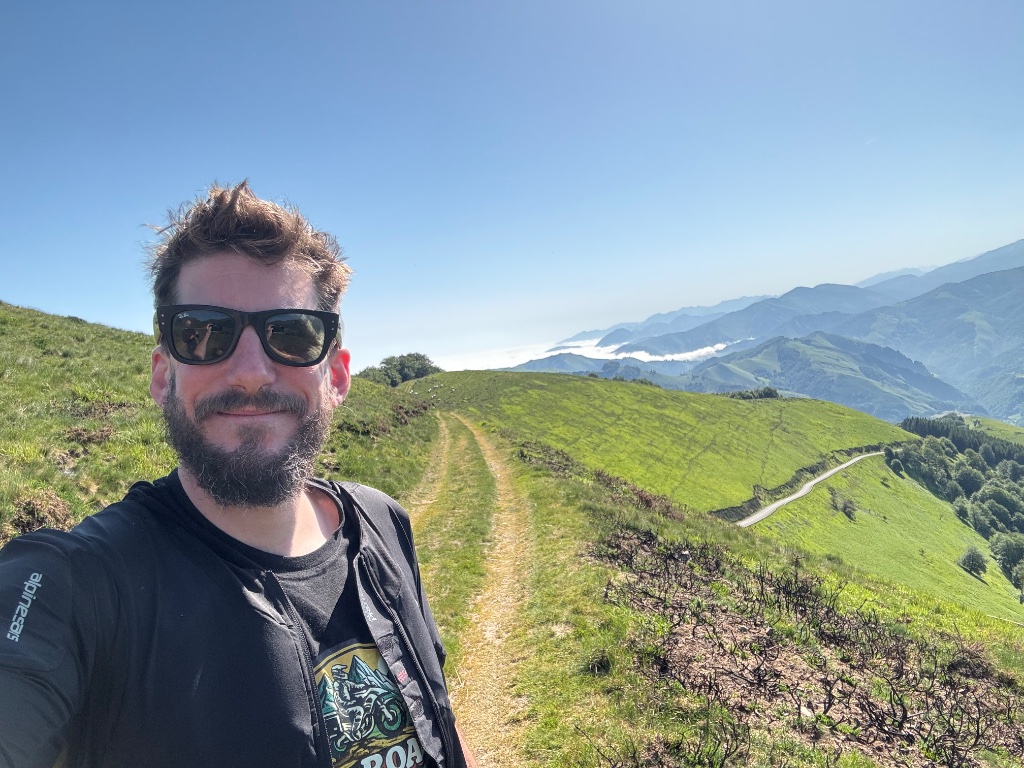
Above the cloud, above the treeline. Snow-capped peaks on the horizon, a dirt ridge track ahead. This is where the road map ends.
The pass we took out of Montory is one of the routes I keep deliberately off the public itinerary. Not out of secrecy for its own sake — but because roads like this are genuinely best discovered in person, in context, with the right group and the right morning. It sees almost no traffic. The surface is as it has always been. The views are extraordinary in a way that no photograph quite captures, because they require the approach to make sense.
What I can tell you is that if you want to ride it, you’ll need to join a Wild Roads tour. Some things are worth keeping that way.
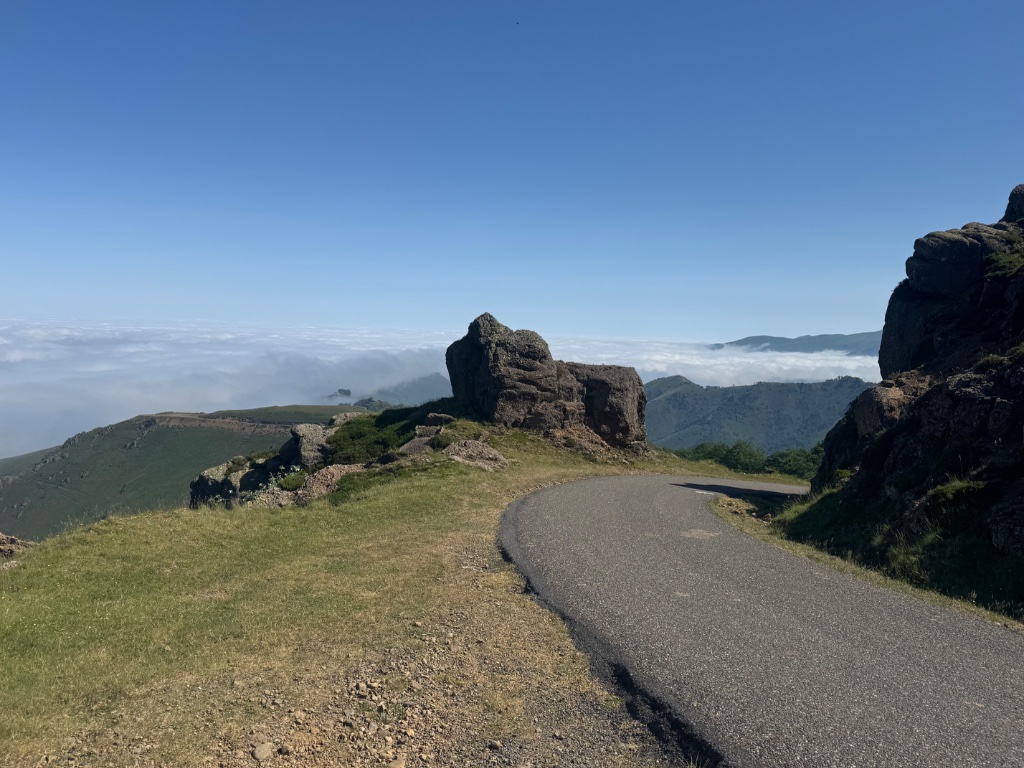
Above the clouds. The road curves around a rock formation with a white sea filling the valley below. This is what you get above the grey.
The Cloud Inversion
And then it appeared. We broke through the cloud layer at altitude and the world below us disappeared — replaced by a flat, brilliant white sea of cloud stretching to every horizon. The Pyrenean peaks rose through it like islands. The sky above was deep blue and completely clear. The temperature dropped a few degrees and everything went very quiet.
A cloud inversion is one of those meteorological events that sounds impressive when you read about it and is genuinely overwhelming when you’re standing above it on a mountain road. The group stopped immediately. Nobody needed to be asked.
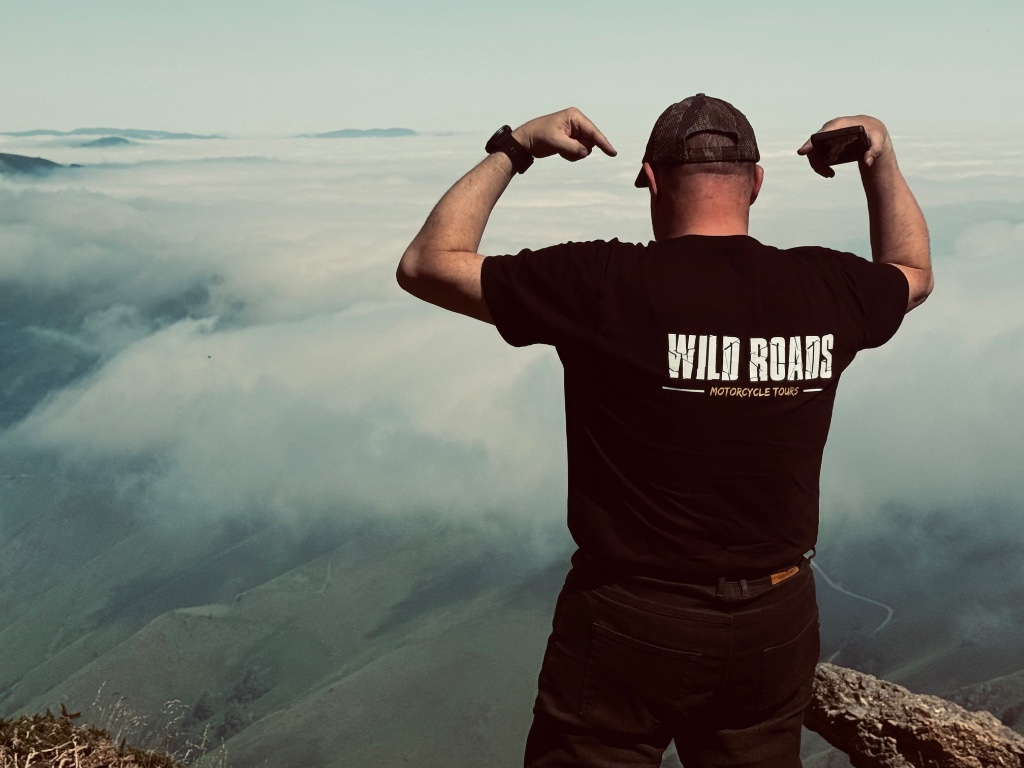
Wild Roads above the clouds. That T-shirt tells you everything you need to know about how this moment felt.
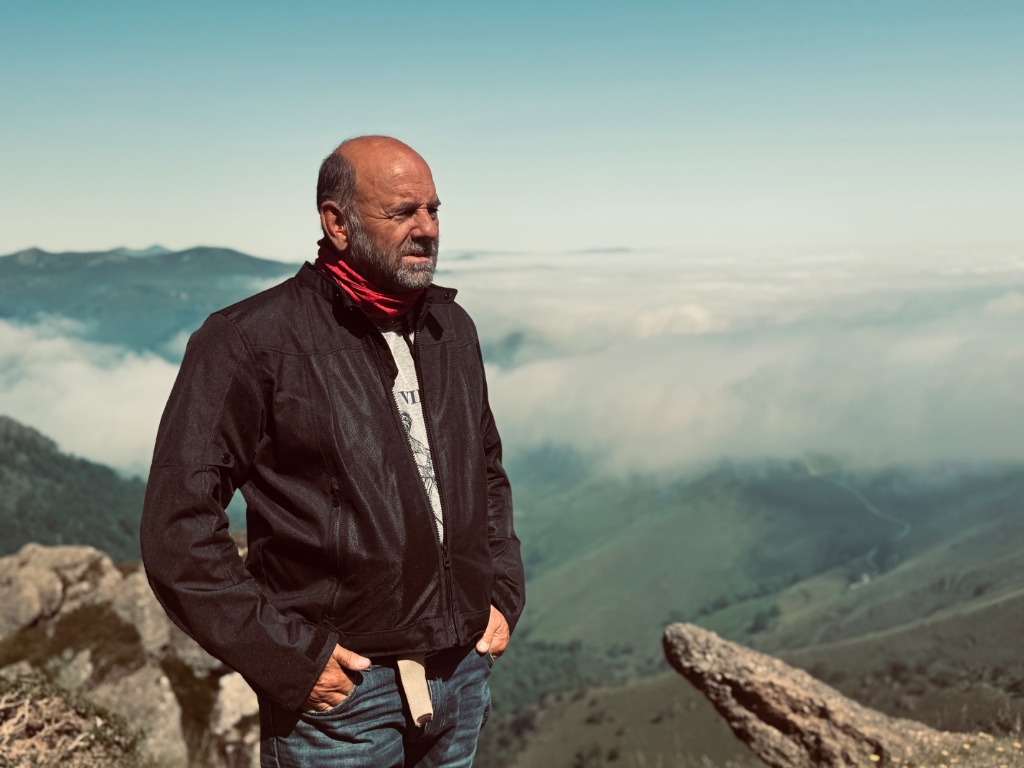
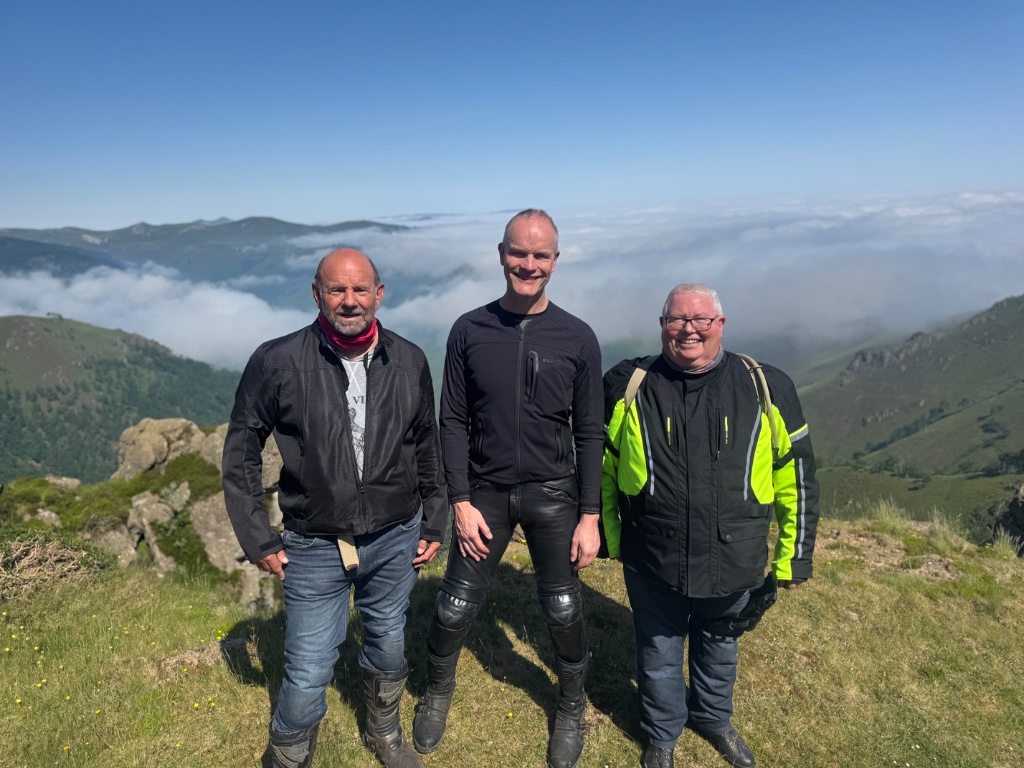
Above the cloud. Three riders, one view, no words needed.
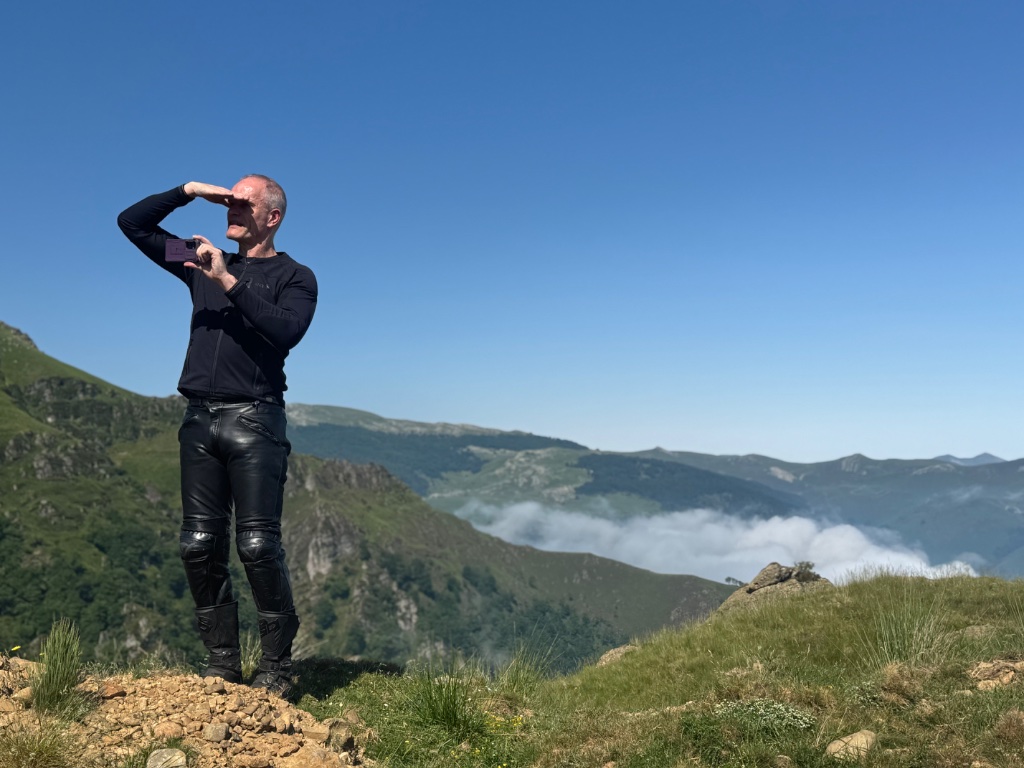
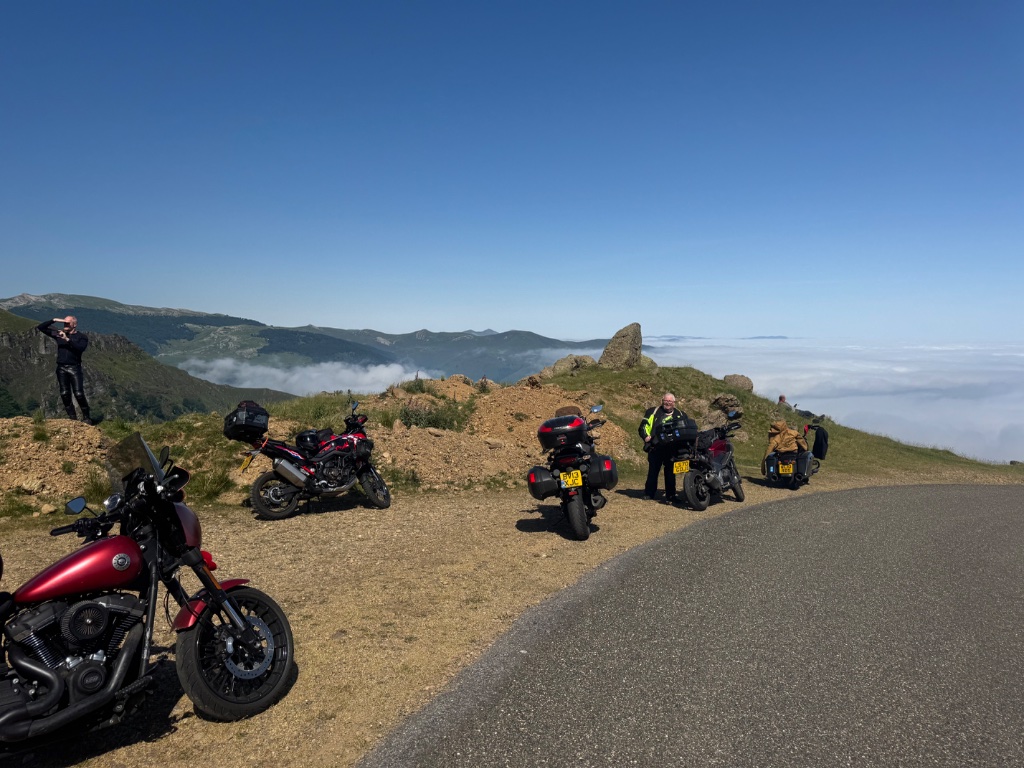
Trying to capture it on a phone. The bikes parked at the edge of the world. You can’t quite do it justice but you try anyway.
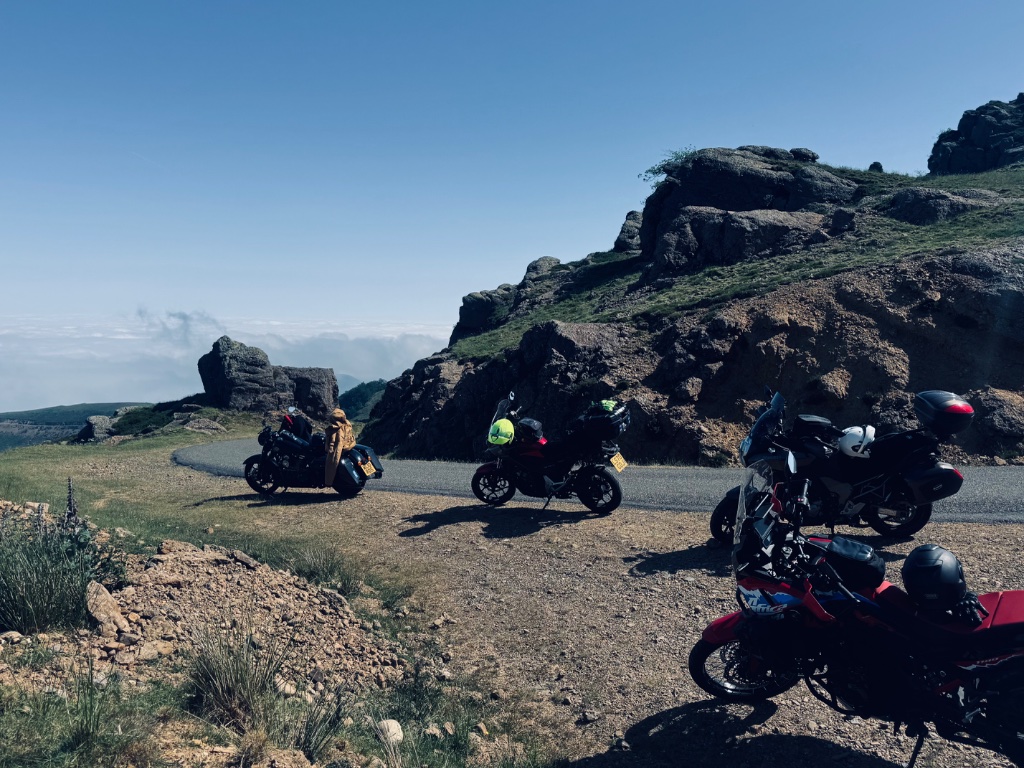
The fleet on the pass road. Rocky crags above, a white sea of cloud below, and an open road ahead.
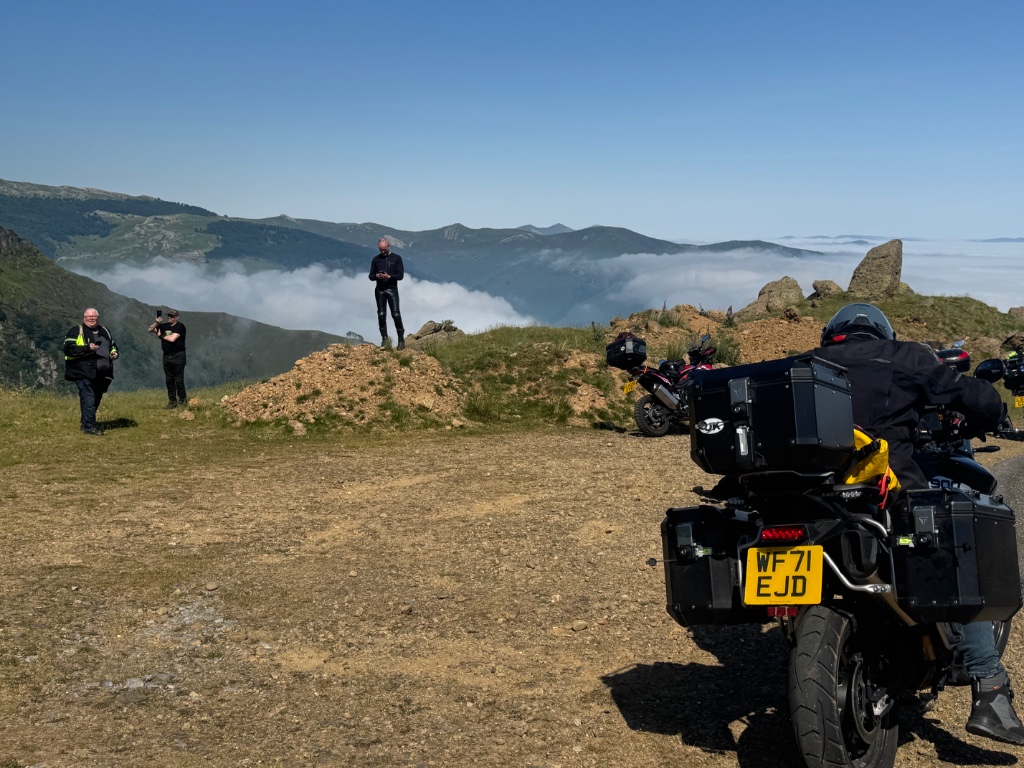
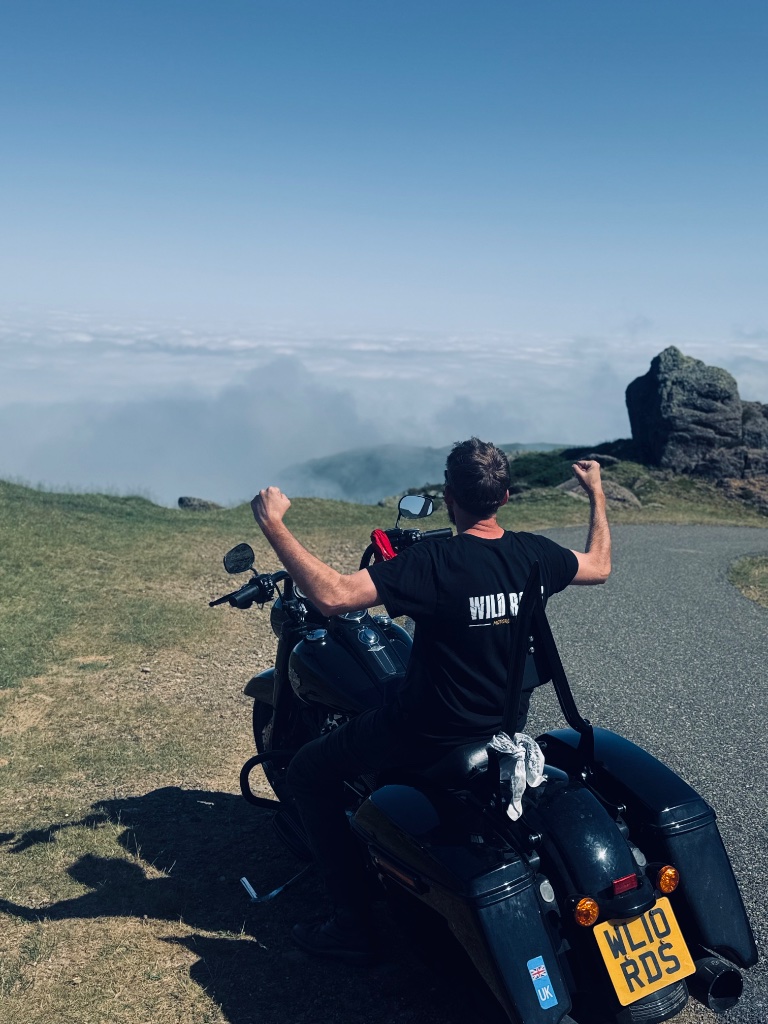
Every angle of the cloud inversion deserved a photo. Nobody argued with that.
Cloud Inversions in the Pyrenees
A temperature inversion occurs when a layer of warm air traps cooler, moister air in the valleys below. At altitude, the result is a dramatic visual effect — the valleys fill with cloud while the mountain tops remain in clear sunshine. Late May and early June are prime conditions for inversions in the western Pyrenees, particularly after a cooler, overcast night at lower elevations.
For riders, it means you can leave a grey, damp valley floor and be in blazing sunshine within 20 minutes of climbing. The transition is one of the most memorable experiences in Pyrenean motorcycling.

The descent back through the cloud layer. Above: blue sky and sunshine. Below: this. The Harley takes it in its stride.
Saint-Jean-Pied-de-Port
The descent from the pass brought us down through the cloud layer and into the green foothills, and eventually into Saint-Jean-Pied-de-Port — one of the most famous small towns in France, though most people who know it know it for entirely non-motorcycling reasons.
Saint-Jean-Pied-de-Port is the traditional starting point of the French Way of the Camino de Santiago — the same pilgrimage route whose destination we’d visited back on Day 3 in Santiago de Compostela. Here, in this small fortified Basque town at the foot of the Pyrenees, thousands of pilgrims set off every year to walk the 800km to the cathedral. The contrast between arriving by motorcycle and leaving on foot is not lost on anyone who makes the stop.
Saint-Jean-Pied-de-Port
Nestled at the foot of the Pyrenees in the Nive valley, Saint-Jean-Pied-de-Port (“Saint John at the Foot of the Pass”) has been a gateway town for Camino pilgrims since the Middle Ages. The town’s old quarter — its cobbled main street, the fortified gate, the Citadelle above — is remarkably well preserved. In late May, the pilgrim hostels are already busy and the main street is a steady stream of people with walking poles and enormous rucksacks, all heading in the same direction.
We explored the old quarter, walked the cobbled main street alongside pilgrims who were just beginning their 800-kilometre journey, and found a good spot for lunch and coffee. It’s one of those stops that earns its place on the route not for the riding but for the context — a reminder that the roads we move through so freely have been walked by millions of people for a thousand years.
San Sebastián — The Old Town and the Ocean
From Saint-Jean-Pied-de-Port the route turned north and west, back into the Basque Country and toward the coast. San Sebastián — Donostia in Basque — is one of the great cities of northern Spain: a bay city of elegant Belle Époque architecture, world-famous cuisine, and a beach that genuinely competes with anything on the Riviera.
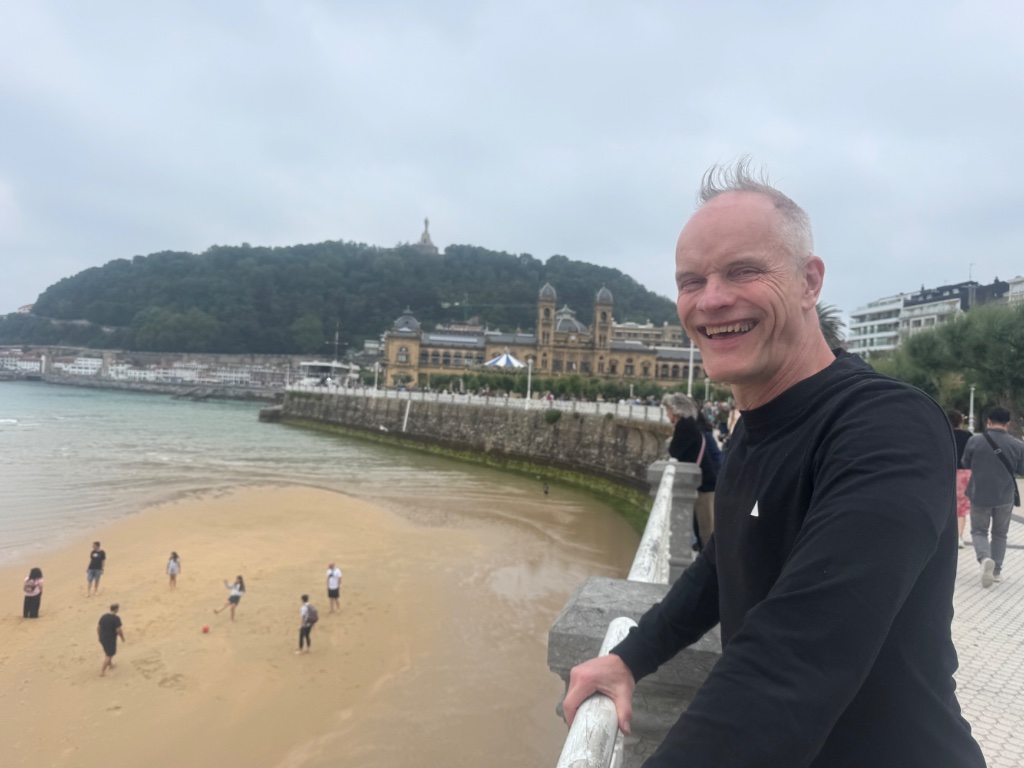
La Concha beach. The Belle Époque town hall and Monte Urgull behind, the Atlantic in front. After nine days in the mountains, the sea air hits differently.
We arrived in the early evening and headed straight for the Parte Vieja — the old town. If you’ve never done the San Sebastián pintxos circuit, the concept is simple: you walk from bar to bar in the old town, eat pintxos (the Basque version of tapas — small bites on bread, served cold or hot from the counter), and drink whatever’s cold. The bars are packed, the food is extraordinary, and the atmosphere is exactly what you want after a day of mountain passes and cloud inversions.
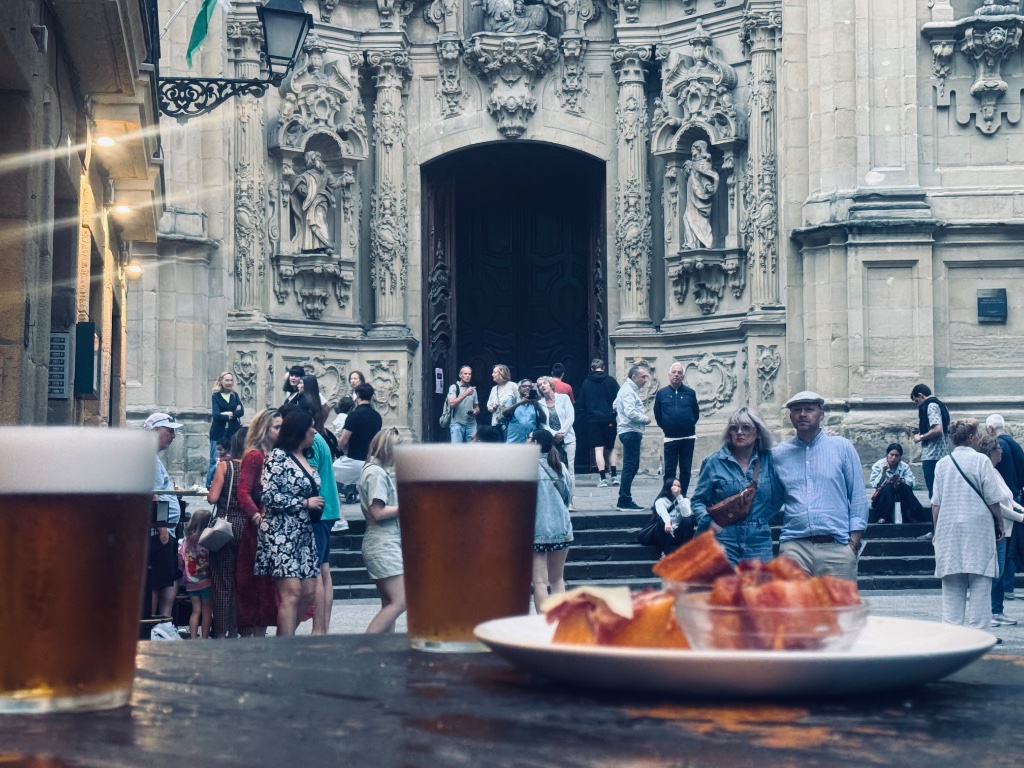
Two pints, a plate of pintxos, and the ornate facade of the Basílica de Santa María del Coro behind. The old town does evenings properly.
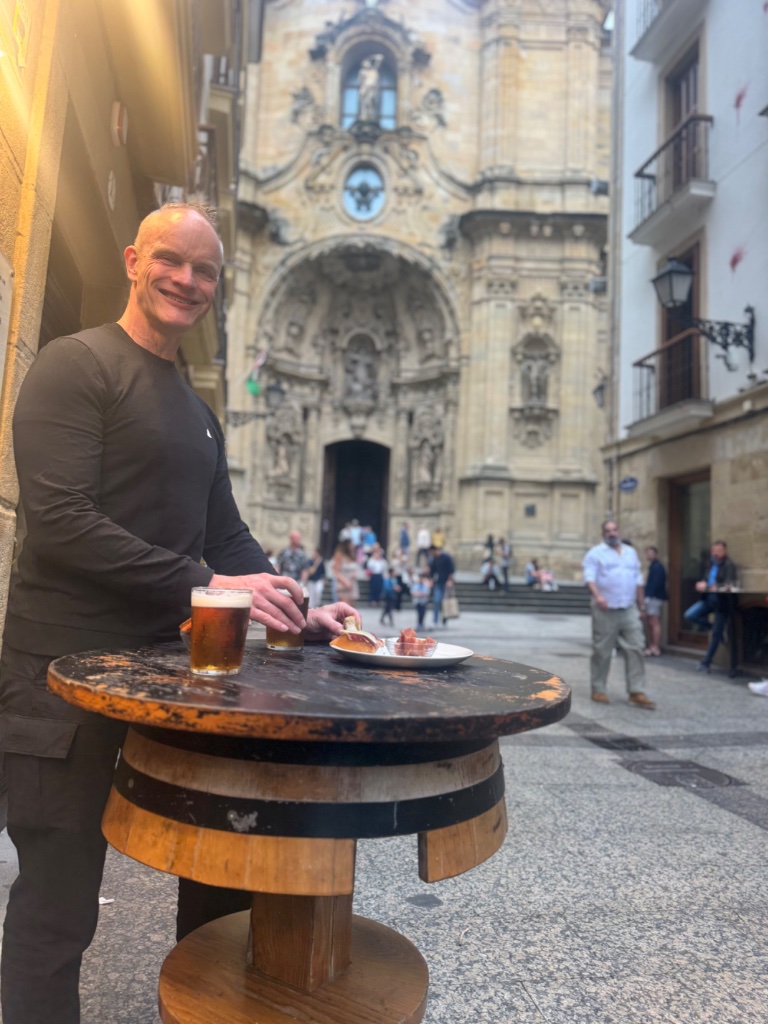
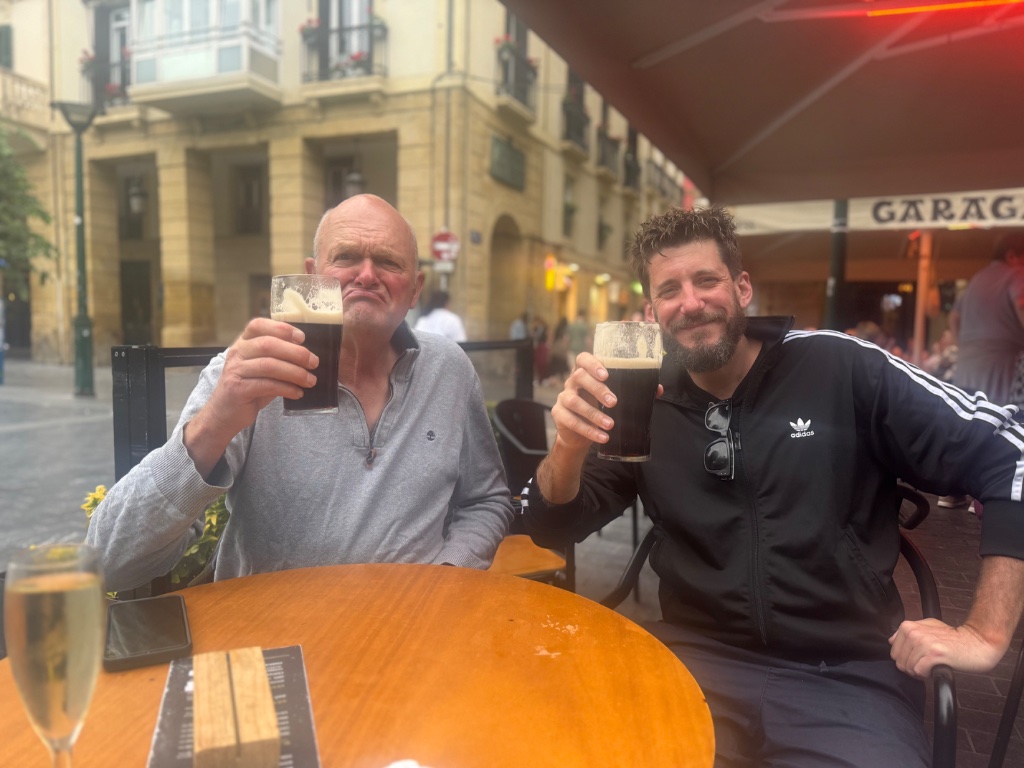
Pintxos, Guinness, good company. The Pyrenees were a full day behind us. San Sebastián was doing its best to make us forget everything else.
Guinness in San Sebastián has been a Wild Roads tradition longer than I can remember. There is something about arriving at the coast after days in the mountains that makes a cold dark beer feel like exactly the right thing. The old town was busy, the bars were packed, and nobody was in a hurry to go anywhere.
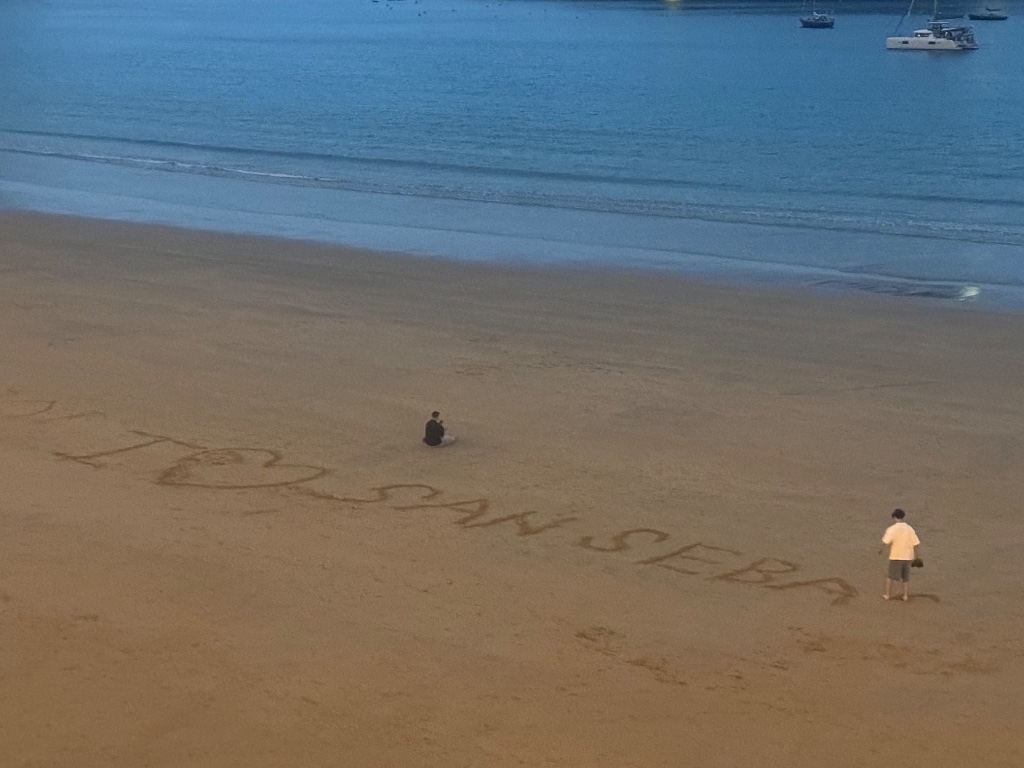
“I ♥ San Seba” — written in the sand on La Concha at dusk. Someone summed it up perfectly. The Pyrenees were somewhere behind us in the dark, and nine days of riding felt like exactly the right way to end up here.
The Picos & Pyrenees tour takes in Saint-Jean-Pied-de-Port, San Sebastián and the secret passes of the French Basque Pyrenees.
View the Tour →